







“We regard Remote as a prominent and dependable partner in this domain. Their specialist support in administering local payroll, ensuring tax compliance, and managing HR operations has rationalised our internal processes and enabled us to pursue greater opportunities for growth and success on a global scale.”

Small business
A global HR platform designed for small business
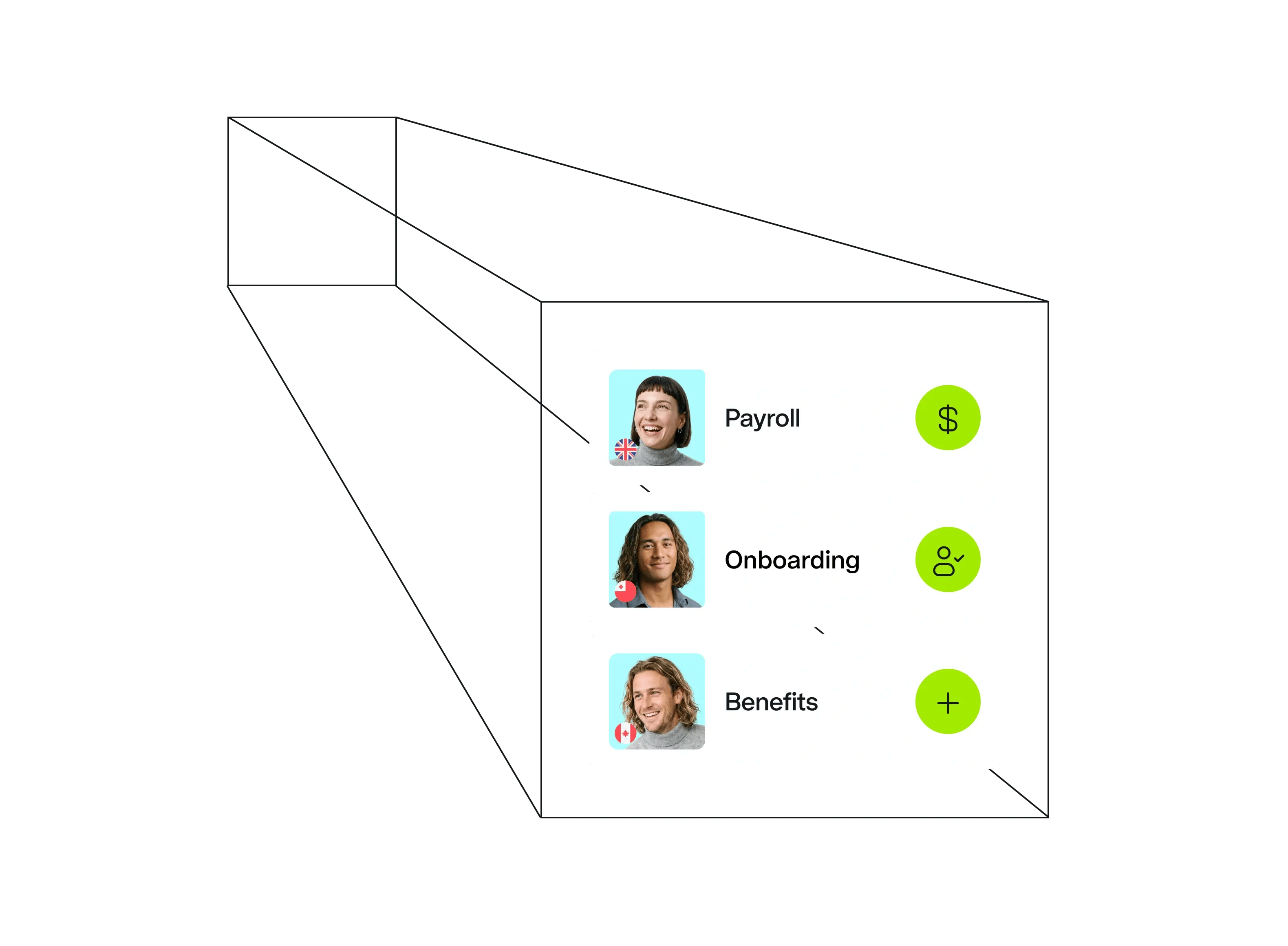
At your company you handle multiple responsibilities. It’s time to take 'payroll processor' off your list. Remote’s intuitive platform enables small businesses with 1 – 200 employees to process international payroll, submit tax filings, and maintain compliance, regardless of where their employees live.


A complete global HR hub for growing businesses
Small businesses must scale rapidly yet responsibly. Establishing costly legal entities can stall progress. Remote’s global employment platform gives you access to international talent without the risks of expanding alone. Maintain a laser focus while Remote onboards, pays and manages your team with the assurance of global compliance.


Sidestep the steep, expensive learning curve of handling HR, benefits, tax and payroll compliance across several countries. Remote equips you with the tools to hire rapidly while avoiding the costs and risks of going global on your own.
Avoid the time and expense of creating and maintaining legal entities solely to hire overseas. Remote eliminates administrative errors and keeps you compliant globally so HR can concentrate on sourcing and retaining excellent talent, wherever they are based.
Onboard, manage, and pay employees and contractors in just a few clicks on our self-serve platform. Remote integrates with leading HR systems such as BambooHR, Greenhouse, and HiBob so you can retain your current HR stack. Enjoy full visibility of all employee data on one intuitive platform.
Remote is designed to simplify HR processes for administrators and employees. Employee information is always accessible, and Remote’s expert global support team is available to provide administrators, employees and independent contractors with specific, localised advice.
Remote manages the complexities of hiring across borders
Using Remote to hire and pay your distributed team gives you a trusted partner and a dependable platform. That delivers confidence and compliance throughout every stage of your HR processes.
Offer stock options with expert tax advice
Cultivate ownership and morale by offering stock options or equity incentives to international employees. Our global equity expertise keeps you compliant at every stage, from tax filings to withholding.
Rapid onboarding to support fast team growth
Reduce time spent answering employee and contractor queries with our guided onboarding, intuitive platform (including time off and expense management), and continuous support.
Manage taxes and compliance worldwide
Use Remote’s 100% owned-entity model to gain a global footprint without the burden, risk or cost. Remain compliant at every stage of the employment lifecycle.
Competitive, localised benefits to boost employee retention
Access country-specific benefits packages at highly-negotiated rates so you can offer equitable, best-in-class benefits to your employees for a fraction of the usual cost.


Retain your talent wherever they move with Remote’s in-built relocation expertise. Remote ensures the correct right-to-work permissions are secured so employment agreements remain globally compliant during cross-border moves.
Avoid misclassification penalties, meet investor scrutiny and retain top talent with Remote’s in-built guidance on converting contractors to employees.
Protect your startup’s IP and invention rights with Remote’s robust security provisions. We monitor changes in IP law and continually update agreements and protections to keep your business secure.
Remote’s customer support experts are available worldwide to provide the help and assistance you need at every stage of the employment process.
A word from our customers
Join the customers who rely on Remote to transform their business.
Questions to consider before outsourcing small business HR services
Small business payroll software enables organisations without the scale of large corporations to run payroll for team members in multiple locations. While many firms may operate locally, the rise of remote work now allows companies of all sizes to engage team members in different regions, including overseas. Whether a small business needs to run payroll for a few team members or an entire distributed international team, payroll software must be able to adapt to that business’s needs.
For a small business, payroll software may cover just the basics, such as making timely and accurate payments to team members. For international teams, payroll software also ensures team members are paid in the correct currencies and, where applicable, through approved banks. More comprehensive payroll platforms like Remote include additional services, such as benefits administration and globally compliant employee stock option plans.
Generally, small businesses are unable to manage payroll in-house for international teams. To pay team members in other countries legally, they typically have three options: open an entity in each country where employees live, work with an employer of record, or engage workers as contractors.
Although some companies choose to engage all workers as contractors, that approach can create complex compliance risks. Misclassifying international contractors is a serious issue that could cost a small business thousands of dollars, not to mention time spent in remote legal disputes. Hiring international contractors can be appropriate, but only when they are genuine contractors and when using an international contractor management platform.
Some small businesses opt to open one or two legal entities in countries where they have a significant number of employees and a solid business presence. Few, however, establish entities everywhere they hire because doing so is costly and can take months to complete.
An employer of record is the fastest, simplest way for small businesses to operate payroll for global teams. An EOR enables a small business to hire employees legally in other countries. A global employment platform such as Remote manages global payroll and taxes, administers benefits to satisfy local employment obligations, and handles all issues of compliance.
Small businesses outsource HR services because it is usually more cost-effective than bringing every HR function in-house. The resources required to run payroll; manage benefits; withhold taxes; make statutory payroll deductions; run employee stock option plans; and remain compliant with evolving regulations are often too great for a small business to manage. Even many enterprise organisations outsource their HR services to specialist providers.
For small businesses hiring internationally, HR management challenges intensify. Remote’s guide to international payroll processing highlights several of the difficulties small businesses face and offers practical tips on how to navigate them.
Outsourcing payroll reduces costs for small businesses while helping to deliver a consistent employee experience. Even in large organisations, payroll and benefits management problems are common when using in-house tools.
In a small business, every employee plays a critical role in the organisation’s success, so mismanagement of payroll can quickly damage the employee–employer relationship.
Outsourcing payroll allows small businesses to save time on administrative processes while significantly reducing payroll errors. Employees expect on-time, accurate and consistent payroll as a basic condition of employment.
For a small business with limited resources, meeting the standard of 100% error-free payroll with an in-house tool or solution is difficult. With an outsourced payroll solution, however, even the smallest operations can enjoy world-class reliability in payroll.
Startups operate under different expectations and face distinct challenges compared with small businesses. Growth phases for startups can be sudden and unpredictable, with rapid pivots. Small businesses also experience growth, but for more established firms those changes tend to be less chaotic.
Both startups and small businesses require reliability and flexibility from their chosen payroll services. Small businesses often lack the investor backing available to startups, meaning costs typically need to be covered by revenue rather than investor capital. For this reason, small businesses should be especially cautious to avoid payroll vendors with hidden fees or unpredictable expenses.
It is important for small businesses to ask the right questions about payroll before entering into any new relationship with a payroll services provider.
Costs for small business payroll services vary depending on where employees live, the company’s total payroll and which benefits are offered. In general, small businesses do not need to pay high fees for basic payroll services, particularly for local teams.
Small businesses with remote teams spread across multiple countries incur higher payroll costs, but those fees typically cover services such as benefits administration, foreign tax withholding and compliance with local employment regulations.
When the choice is between getting the right candidate for an open role or continuing to search locally, onboarding an employee in another country can produce significant cost savings over time. For more information on costs for small business payroll across multiple countries, see Remote’s pricing page.
Employers of record (EORs) were once services reserved for larger, well-funded enterprises, but that is no longer the case. The growth of remote work has driven EOR pricing down, enabling small businesses to access international talent without paying high fees or salary mark-ups.
Any small business looking to use an EOR to onboard international talent should pose the following questions to prospective EOR providers:
Does this EOR operate owned entities in every country, or does it outsource its services to third parties in some jurisdictions?
What protections does the EOR provide for intellectual property and invention rights?
How securely will the EOR manage your employees’ sensitive personal information?
If you offer an employee stock purchase plan, can the EOR administer that plan for you, including tax withholding?
Will you need separate platforms for contractors and employees?
Are there hidden fees that vary between countries?
Does the EOR have special discounts for startups or social purpose organisations?