10 inclusive workplace practices for your remote team


80% of people currently work either hybrid or remote. While this shift offers a variety of benefits, it can also make it more challenging to create an inclusive workplace.
When you decentralize your workforce and disrupt organic in-person conversations, you face new obstacles related to diversity and inclusion (D&I). That is, unless you take the appropriate steps to maintain healthy inclusion initiatives in a remote-first world.
This article breaks down everything you need to know about building more inclusive workplace practices.
What is an inclusive workplace?
An inclusive workplace is one that aims to embrace and support diversity as part of its culture. Inclusive workplaces have clear processes and policies in place to integrate and support everyone, regardless of their background or education.
From a cultural perspective, inclusive workplaces encourage employees with diverse backgrounds to thrive. All employees feel welcome, respected, supported, valued, and empowered to make a difference in an inclusive workplace.
The goal of an inclusive workplace is to make sure that all employees feel:
They have a voice
They belong
They are treated as a unique individual
They are valued
Much like the wider concept of company culture , inclusive workplaces take time to develop. They’re created through a combination of systemic efforts like policies, processes, and values, as well as the behavior of each individual within the company.
To succeed in being inclusive, you need to encourage employees to practice this behavior on a daily basis.
Examples of inclusive workplace practices
Inclusive workplace practices can show up in many different ways. Here are some common examples:

Honoring all cultural backgrounds
In an inclusive workplace, there is a proactive effort to celebrate different cultural backgrounds. One option for making sure this happens is hosting a potluck where every employee brings a traditional dish from their culture.
You can also highlight inclusive observances, such as Black History Month, Pride Month, and Women’s History Month, in your company’s newsletter and other materials.
Introducing mentorship programs
Mentorship programs are a great way to help employees feel more confident in their roles and work effectively with other departments. For instance, you could offer a social media workshop to senior employees with limited knowledge in this area to improve engagement, collaboration, and teamwork across your organization.
Staying open to different opinions and perspectives
Welcoming diverse perspectives is key to creating a culture of inclusivity. You can accomplish this by encouraging all employees to contribute ideas in meetings, regardless of their background or role in the company.
Some helpful strategies include scheduling smaller group meetings and asking the participants to prepare their responses ahead of time. This approach prevents anyone from feeling pressured while also providing a more comfortable space to weigh in.
When employees feel genuinely heard and appreciated, they become happier and more likely to stick around.
Diverse hiring processes
Prioritizing inclusion in hiring processes can help you reach candidates from different backgrounds organically. This expands your talent pool and makes it easier to find the best possible person for the job.
To do this effectively, network with diversity-focused professional organizations or create an employee referral program.
How does working remotely impact inclusivity in the workplace?
Remote work can make it more challenging to build an inclusive team. Company culture evolves organically when people can interact with one another face-to-face in an office. In remote or hybrid environments, that direct communication can take a hit, especially if employees are distributed across different time zones.
Remote work can (and should) be a benefit to communication , not an obstacle. However, transitioning from an office to a remote setup (or any hybrid setup) can be tricky. The resulting communication challenges can directly impact your efforts to maintain an inclusive culture. Some of the risks may include:
Siloed teams. Without proper guidance, online collaboration tools can lead teams into silos, wherein employees only communicate with a select few members of the company. This reverses progress toward diversification and inclusivity, making it harder for teams to work cross-functionally.
Lack of vision . In a decentralized workforce, leaders must be deliberate and transparent when sharing policies around inclusivity and diversity. Without this shared vision, it’s difficult for inclusivity to become a default state of being for all employees.
Inconsistent onboarding. New hires in an office generally receive a dose of company culture by osmosis. Remote hiring requires you to manually build that cultural component into the process. Without deliberate effort here, new hires may have inconsistent experiences and differing expectations of company life.
Despite these challenges, remote work is here to stay — and D&I play a key role in its success.
According to a survey on D&I conducted by McKinsey, just 55% of surveyed employees said they feel included at their company. That answer, unsurprisingly, depends on several demographic and seniority factors. Among those who felt less included were employees in entry-level roles, women, and ethnic or racial minorities.
In addition, 39% of respondents said they have opted out of a job due to a perceived lack of inclusion. So, you can understand why inclusion is an important factor for all companies.
Before we jump into how to create an inclusive workplace, let’s discuss the benefits you can expect from it.
The benefits of D&I
Inclusive workplace practices offer a wide range of benefits for both employees and companies.
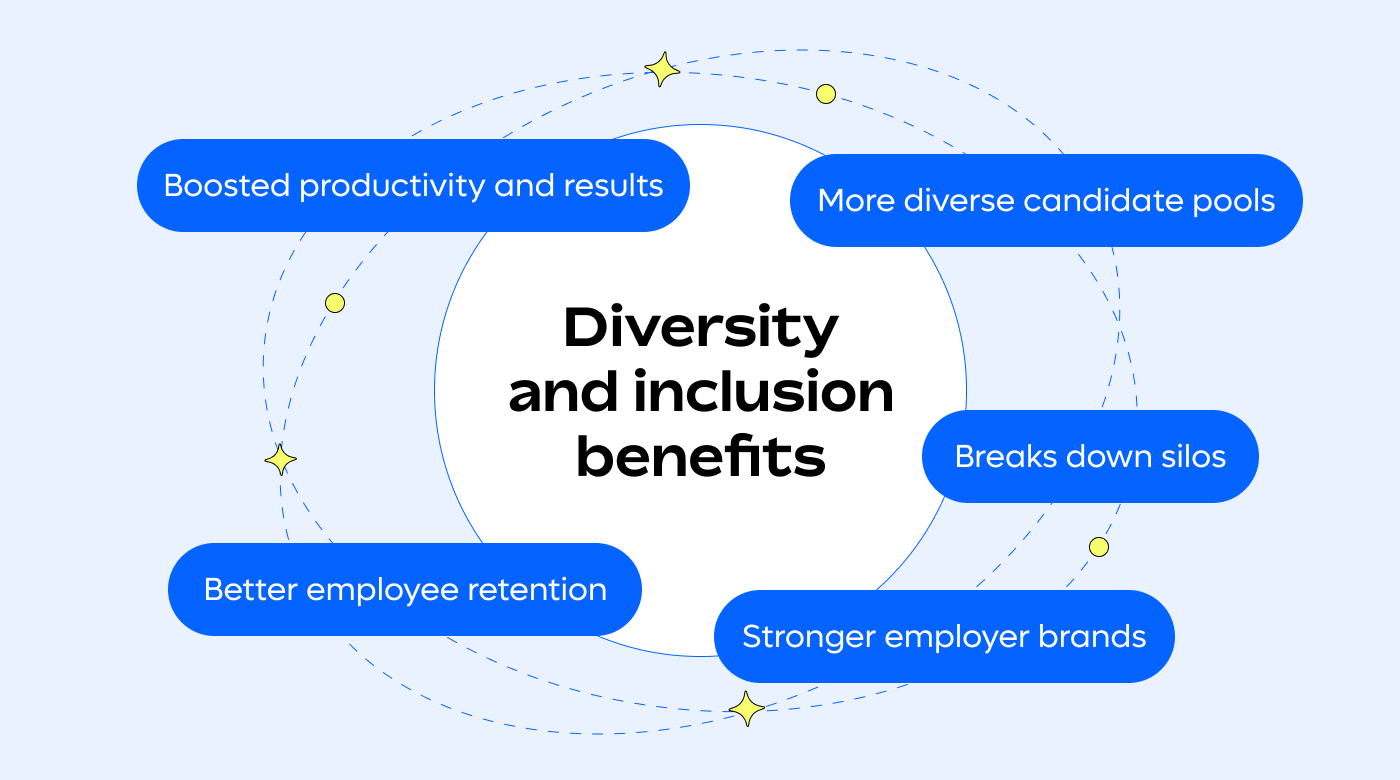
First, they help create a more welcoming, productive, and fair environment by making sure that all team members feel equal. When people feel included, they also become more engaged.
Beyond the benefits to individuals, D&I also leads to better financial performance for the organization. This is because inclusive workforces lead to:
Boosted productivity and results thanks to improved creativity, problem-solving, and innovation. Data shows that inclusive teams are 35% more productive .
More diverse candidate pools due to stronger efforts to target and appeal to job seekers from diverse backgrounds and globally dispersed locations.
Better employee retention thanks to employees feeling accepted and valued. This leads to a deeper appreciation for your company and happier employees who stay longer.
Stronger and more compelling employer brands, which signal to all prospective candidates that a company values and supports everyone. This improves your company’s reputation and makes you more appealing to candidates from around the world.
Breaking down silos and echo chambers by introducing a broader range of voices, perspectives, and experiences. This gives your company a competitive edge, helping you adapt and respond to market conditions from a place of diversity.
Now that we’ve talked about the challenges and benefits of maintaining diversity, let’s dive into some practical advice for creating your own D&I policy.
10 inclusive workplace best practices
As you begin mapping out your own inclusive workplace practices, McKinsey highlights four factors to keep top of mind:
Diverse and inclusive leadership
Meritocracy and initiatives to increase fairness
Sponsorship and advocacy
Access to senior leaders

Once you’re ready to put your inclusivity ideas into action, here are 10 best practices to follow.
1. Set up a remote D&I committee
Your first step should be to establish a D&I committee at your organization. This will help you understand where you are currently, where you need to go, and what your employees want to get there.
Recruitee recently created a D&I committee to “address honestly and head-on the needs of [their] team, and to help increase equality for all.” The goal was to create conversations and actions that challenged the status quo.
To do so, Recruitee used an external D&I expert to identify areas of concern by interviewing the people team and other employees. They also ran a company-wide D&I survey to help them craft an inclusion roadmap. From there, the D&I committee was formed with employees from all levels across all offices. The team meets bi-weekly to measure progress, assign tasks, and confirm that they are following the D&I roadmap.
2. Include all employees in conversations about inclusion
D&I programs will not work unless all employees are consulted. Remember: this is a cultural initiative, and culture is the sum of all of your parts.
As such, take time to survey employees get their opinions about the current state of D&I at the company. Ask for advice on how to make a more inclusive workplace. Don’t shy away from what’s good, bad, and ugly at your organization currently. Take that advice and use it to craft a path forward.
3. Create a formal D&I policy
The next step is to create a D&I policy that can live alongside your remote work policy. This should outline what it means to be a diverse, equal, and inclusive workplace and how your company is committed to getting there. Write your mission statement and vision, along with your interpretation of what D&I means.
Next, outline steps, policies, roles, and rules that will be implemented to meet that vision. Make sure to outline how that will work in a remote setting, including what tools and resources are available.
4. Facilitate open feedback and communication
No inclusivity program will succeed without open and honest feedback. Aim to create a culture of radical candor, where employees are encouraged to talk to their leaders and team members about D&I.

Follow real open-door policies and create anonymous channels, where people can share their thoughts and concerns. Use this feedback to guide your path forward.
5. Create spaces for non-work chats
Find ways to replicate the lunch room and watercooler chats that occur in the office. Create open channels and discussion rooms where people can go to discuss issues that are important to them.
The goal is to encourage open dialogue and provide space for employees to get to know each other on a personal level.
6. Make time to build organic connections
Encourage teams to carve out time for casual and 1:1 conversations. This will help employees to get to know each other beyond the surface level and begin to learn new things about their peers.
The goal is to replicate the in-person, organic relationship-building that happens naturally when people are physically near one another.
7. Be intentional about developing all employees
To be truly inclusive, it’s important to support growth and learning for all employees. That means giving everyone on the team equal opportunities to try new things and expand their skill sets.
Fortunately, working remotely makes it even easier to include everyone instead of accidentally overlooking people you don’t see very often. Public channels are fully public for remote teams.
Finding ways to make everyone on your team feel included will help them become more engaged and impactful contributors to the team.
8. Practice empathetic leadership
While D&I is a company-wide effort, it starts with committed leaders. Train and talk to the leaders at your organization about what inclusion means and what their role is. Encourage them to take an empathetic approach to their team. This ensures that all employees are given the same opportunities and that issues of potential bias or exclusion are identified and addressed.

One great tip is to use weekly 1:1 meetings for check-ins instead of work. Work asynchronously to communicate project updates and save video calls for employee wellness conversations and concerns.
9. Build more representative teams
To have a diverse and inclusive workforce, you first need to hire candidates from a variety of backgrounds. That means actively removing biased hiring practices, introducing initiatives to support minority employees, and sourcing candidates from a wider talent pool.
When you can hire all over the world , it’s easier to build a diverse team. Now that you have the ability to hire globally, there’s really no excuse not to have a more diverse workforce.
10. Make D&I part of your recruitment strategy
D&I starts with the types of employees you hire. As such, it’s critical that you actively instill the values of D&I into your hiring practices.
That means:
Identifying instances where bias occurs in your hiring process
Educating recruiters on overt and unconscious bias
Implementing more objective hiring processes
Auditing and updating the language used in recruitment ads and job descriptions
The goal here is to remove as much potential for bias as possible from your recruitment process. By taking steps to address bias and actively expanding your sourcing strategy, you can ensure that your talent pools are more representative and inclusive.
How to tailor your inclusive practices to a global workforce
Developing inclusive workplace practices can be more challenging when your employees are spread out all over the world. Since the in-office component is missing, it’s important to think outside the box.
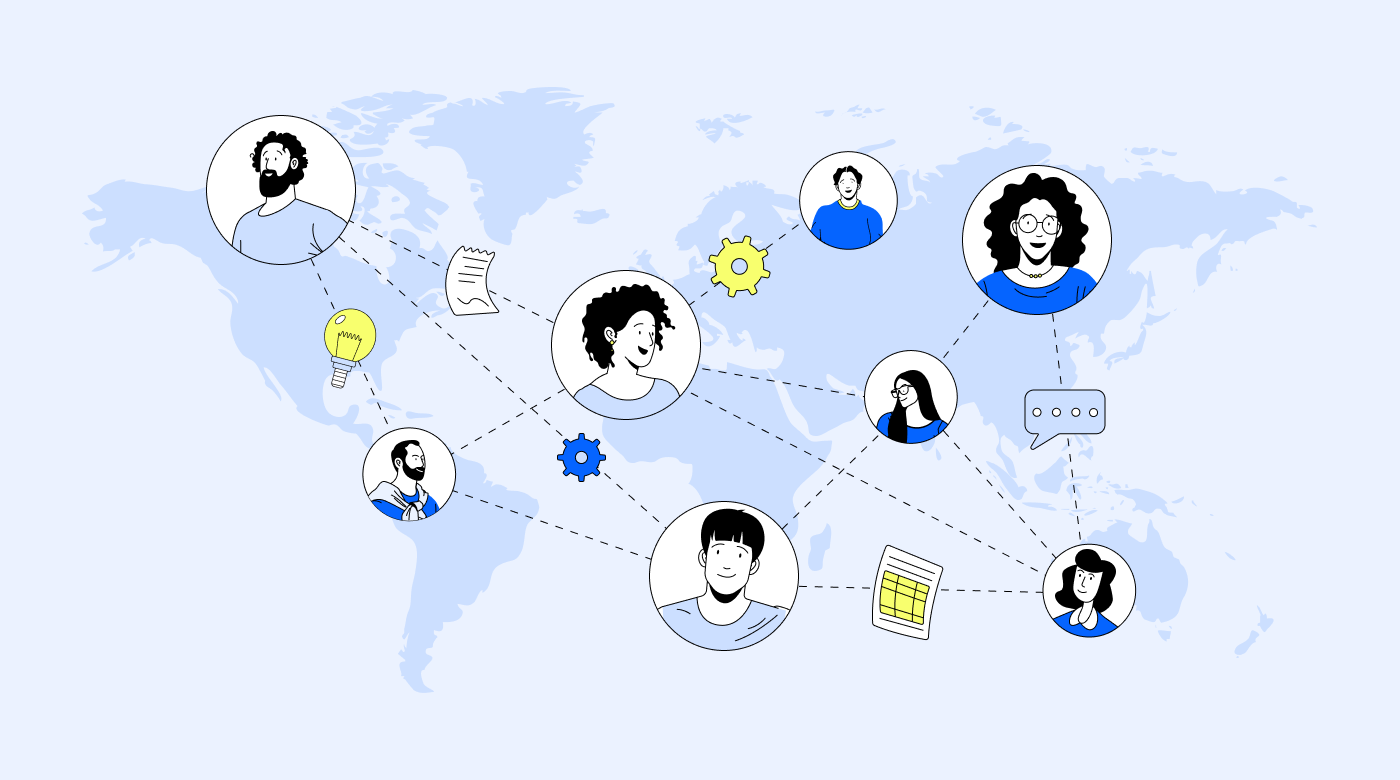
First, focus on creating a flexible work culture that accommodates different time zones and schedules. For hybrid workplaces, make sure that remote employees can access all of the training programs and personal development opportunities that in-office team members can.
Foster stronger personal connections by developing dedicated Slack groups, such as channels for LGBTQ team members or female leadership. You can also consider hosting occasional virtual happy hours to maintain a sense of community across geographical divides.
To make your commitment to inclusivity clear to future employees, showcase your diverse team on your website.
Finally, encourage open communication and feedback. Evaluate engagement metrics and issue surveys to understand what employees value most. Then, adjust and revamp your strategies accordingly.
Create a more inclusive work culture with Remote
Prioritizing inclusivity at work goes a long way in boosting employee happiness, productivity, and engagement. It also offers more diverse candidate pools since it makes your business more compelling in the eyes of potential candidates.
If you manage a distributed workforce, you may have to take extra steps to ensure that everyone feels included and valued.
Remote’s global HR hub makes it simple to manage employee benefits, compliance, taxes, and payroll in one platform. This leaves you with more time to focus on building an inclusive team and providing the support they need.
To learn more about simplifying inclusive workplace practices, book a demo today.
Rebecca Clarke is the Head of People at Recruitee, an industry-leading collaborative hiring software. With over six years of experience in HR and talent acquisition, Rebecca is driven by her passion for matching people with the best career opportunities, growing teams collaboratively, and building inclusive workplaces.
Subscribe for the latest updates
Sign up for our newsletter to get the inside scoop on all things remote work and global employment.