“Remote has become a principal and dependable partner for us in this sector. Their specialist guidance on local payroll, tax compliance and HR processes has made our operations more efficient and has unlocked additional prospects for global expansion and success.”
Employ compliantly, swiftly and confidently – worldwide
Remote employer of record provides the assurance, support and expertise to manage the entire employment lifecycle across the globe.

International businesses expand with Remote
What sets Remote's EOR apart?
We directly employ your team. No outsourcing.
Remote owns and operates 100% of our entities, without relying on third parties. This gives you clear accountability, faster onboarding, and enhanced IP protection in every country.
We set the standard for global employment
Built globally from day one, ranked number one on G2 and trusted by thousands of companies. Our in‑house teams bring an average of over 10 years' experience to every hire.
We help you get more from your EOR
Remote supports every stage of employment, wherever your team is, so you can work with fewer vendors, reduce administration, and have more built‑in support.
Remote EOR in action
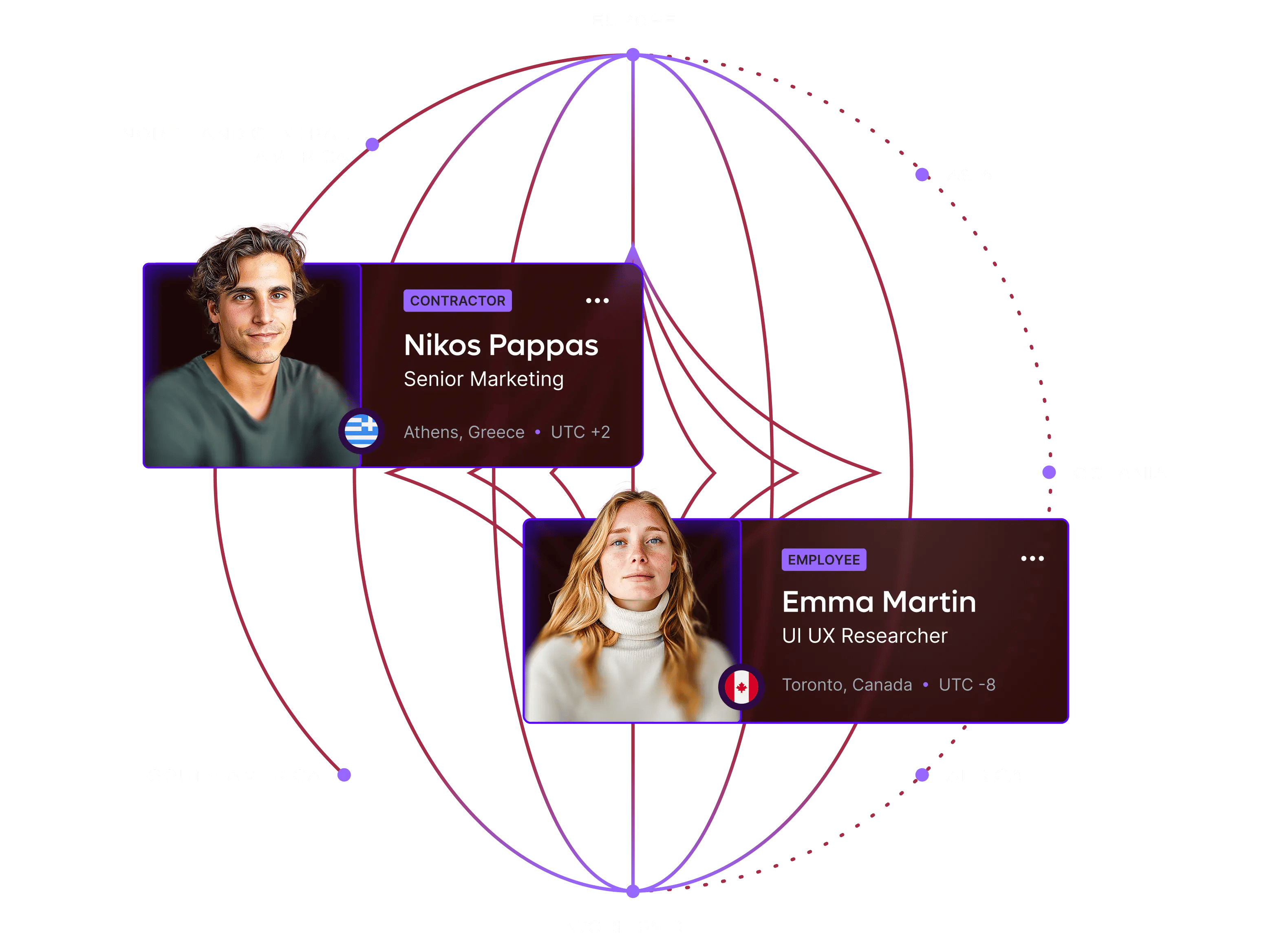
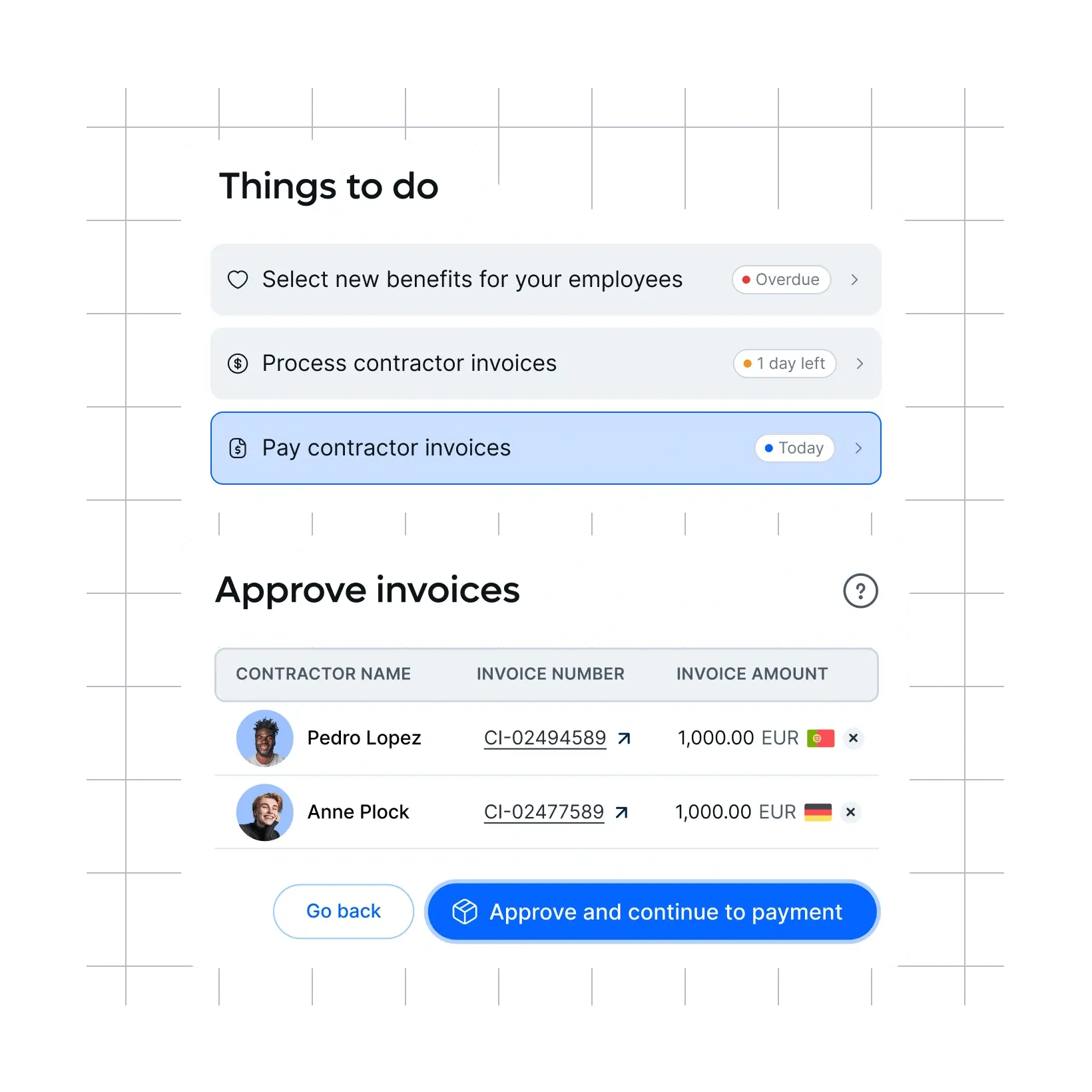
Manage all your employees worldwide from a single platform.
Your foundation for global employment
Everything required to employ staff globally
Remote EOR covers the entire employee lifecycle with in‑platform workflows and genuine support from teams who understand your markets.


Automated, country‑specific onboarding flows with localised contracts and payroll set‑up – no legal preparation required from your side.
Amend contracts, produce employment letters and process resignations without submitting a ticket or switching systems.
Compliance at our core
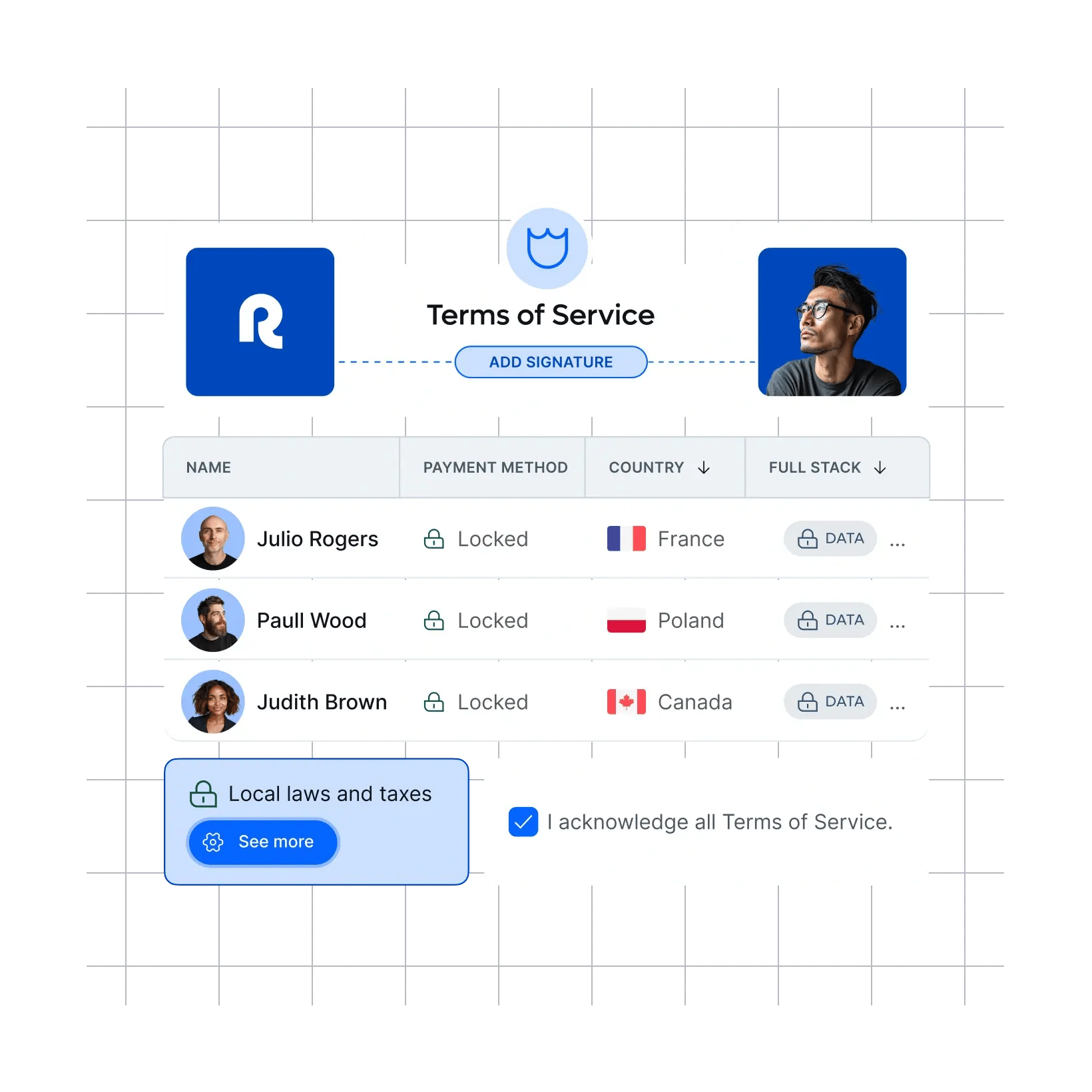
Security, compliance and protection – built in.
From liability and intellectual property to local employment law, Remote has it covered.


Add more when you need it
Get more value from your EOR
Remote’s integrated add‑ons enable you to deliver a premium employment experience, supporting more moments across the employee lifecycle.


Offer equity globally with less complexity, backed by country‑specific tax guidance, grantee visibility and employer tools.
Run compliant pre‑employment screening worldwide directly from the Remote platform, without involving extra vendors.
Book one‑to‑one video calls with Remote’s in‑house HR, legal and tax professionals for trusted guidance in every country you hire in.
Why select Remote?
0%
100% owned entity infrastructure
0 years
10 years average experience of our operational teams
0 day
Average of 2 days to onboard new employees
A message from our customers
Join the customers who rely on Remote to reshape their business.
Employer of Record — per employee/month
Transparent pricing, no surprises
- No hidden fees, just clear upfront pricing
- Pay for what you use
- Designed for global teams
- USD
- EUR
- GBP
- CAD
- AUD
- NZD
- SGD
- CHF
- JPY
- SEK
- NOK
- DKK
Employer of record
£559
Per employee/month
Recruit in 90+ countries without setting up a local entity
Employee onboarding handled by a dedicated specialist
Local payroll processed and paid on time, without fail
Built-in compliance protections
Flexible, competitive benefits tailored locally
Dedicated in-house specialists for local support
HR Essentials included as standard
More expert insights are just one click away

Employer of record
Why EOR is a strategic lever in times of uncertainty

Employer of record & PEO
Get more from your EOR: introducing the next step in global employment
.webp?width=3840&quality=90&auto=webp&disable=upscale)
Employer of record & PEO
When should you use an employer of record, and which should you choose?
Employer of record FAQs
In short, yes — but you would either need to establish your own legal entity in the country or engage the workers as contractors. Each approach has its advantages and disadvantages.
If you establish your own legal entity, you will be responsible for operating in that country. That includes appointing lawyers, payroll specialists, benefits administrators and other professionals. That approach may be sensible if you intend to hire hundreds of people, but for just a handful (or a few dozen), an EOR is usually more cost‑effective.
Hiring workers as contractors requires vigilance. International contractor misclassification is a serious issue and can lead to significant fines and penalties. Using an EOR shields your business from potential compliance risks by ensuring workers are correctly classified as employees.
An employer of record (EOR) is a company that legally employs workers on behalf of another business.
It is important to recognise that not all employers of record operate in the same way; there are substantial differences in how EOR services are delivered. Some EORs, like Remote, own their own legal entities in each country in which they operate, while others act as intermediaries without owning entities. Some may use a mix of their own and partner entities. It is vital to choose an EOR that suits your compliance needs in the countries where you intend to hire.
An employer of record (EOR) can employ staff on your behalf in other countries, whereas a professional employer organisation (PEO) may not. Some firms describe themselves as 'international PEOs' and also provide EOR services. Others using the label 'international PEO' only offer services to companies that already have legal entities abroad.
Think of it this way: if you must hire in a country where you do not have a legal entity, you need an EOR. If you want help managing HR functions — payroll, benefits administration and so on — in a country where you already have an entity, a PEO is appropriate. In short, a PEO offers many of the same services as an EOR but does not take on legal employment in other countries.
Find out more about the differences between an EOR and a PEO in our practical guide.
EOR costs typically take two forms: a flat fee or a percentage-based pricing model. Flat fees are charged per employee regardless of role or salary. Percentage models impose a fee calculated as a percentage of the employee's salary; such fees can vary by seniority and pay.
Be cautious of EOR pricing models based on a percentage. Global employment costs can fluctuate considerably, but a trustworthy EOR will factor these costs in and provide transparent estimates up front. Percentage‑based fees may incentivise keeping worker salaries low while inflating payments to third‑party providers.
Remote’s EOR pricing is $599 per month when paid annually, or £559 when paid monthly. There are no hidden fees, minimums, contract lengths, or exclusivity agreements. Choose the plan that best fits your team’s needs. View our pricing page to see how easy, quick, and affordable growing your global team can be.
The primary role of an employer of record (EOR) is to act as the legal employer for your staff in other countries. An EOR protects your business from liability and compliance risks by legally employing workers on your behalf.
An EOR also handles the complex HR tasks of hiring in different countries. Regulations differ significantly — from pay frequency and acceptable currencies to statutory paid leave and more. EORs manage these complexities, freeing you from administrative burdens so you can focus on recruiting to grow your business.
It is important to note that an EOR does not oversee employees' day‑to‑day tasks or performance. You engage with staff employed via an EOR as you would with any other employee. The only distinction between an in‑office employee and one employed through an EOR abroad is who handles the paperwork.
An employer of record (EOR) is a third‑party provider that is legally responsible for another organisation's employees. Among other duties, an EOR administers payroll for employees in other countries. When you hire via an EOR, you supply the funds and they distribute salaries, making any required tax deductions, social security contributions, and retirement account funding.
Working with an EOR lets you manage international payroll complexities with confidence and in compliance with local laws. An EOR allows you to hire staff abroad without becoming an expert in those countries' payroll regulations and customs. You find the right candidate and let your EOR take care of the details.
When comparing employer of record services, consider how many countries they serve directly, the breadth of global HR solutions they offer such as payroll, benefits administration, onboarding and local tax support, and how rigorously they ensure compliance with each country's laws. Also assess the quality of the user interface.consider the number of countries where they provide direct services, the range of global HR solutions they offer such as payroll, benefits administration, onboarding, and local taxes, as well as how thoroughly they ensure compliance with local laws in each country they serve. Additionally, the quality of the user interface should be taken into account.
Only partner with an EOR that owns local entities in the countries where you plan to hire. Otherwise, employees may be engaged through an unfamiliar third party, leaving you with limited oversight and control over their experience.
Furthermore, your EOR should provide robust protections for your intellectual property.
Without robust protections, you could find yourself involved in protracted legal disputes over intellectual property ownership across jurisdictions—an unwelcome prospect for any business. Consider asking the following questions:
Do you own an entity in this country, or do you outsource employment and compliance to a third party?
How do you protect intellectual property and invention rights in this country?
Do you share employee data with any third parties?
Do you store all employee documents for all countries in a single, easy‑to‑access location?
Remote owns all our entities, provides industry‑leading IP protection and data security, and offers best‑in‑class global employment software to meet your needs.

Yes, using an employer of record is completely legal in most countries. However, the greatest level of legal compliance generally comes from EORs that own their own business entities in the countries where you intend to hire.
Before you engage an EOR, ensure they own a local entity and have the expertise to manage localised payroll, health benefits, taxes and any other compensation you offer, such as stock options.
If you are unsure when to use an employer of record, learn more about why an EOR is frequently the simplest route to international employment.
When you partner with Remote, you will be guided through an efficient five‑step process to prepare you for long‑term success.
Personalised start: You will receive a welcome message from your assigned Customer Success Implementation manager to provide an engaging start to your journey with us.
Comprehensive overview: Meet your Remote expert for a walkthrough of the implementation programme, providing clear insight and setting the foundation for a successful partnership.
Product walkthrough: Receive a detailed demonstration of key EOR features to deliver quick, effective results for your team.
Ongoing support: Benefit from educational content and prompt assistance for ongoing support and reassurance.
Smooth onboarding: Your implementation manager will guide you through the initial EOR onboarding, ensuring a seamless setup and a firm foundation for future hires.
After the first employee is onboarded, you will work with your named Customer Success Manager, who will act as your trusted adviser for employment matters.