Als zelfstandige aan de slag gaan
Omarm de vrijheid van freelancen en laat de administratieve last achter je.
Facturatie, fiscale verplichtingen, contracten en zelfs het eenvoudige proces van betaald worden: dit kan voor een zelfstandige al snel overweldigend aanvoelen. Gelukkig bestaan er oplossingen om de tijd en frustratie van adminwerk te beperken. Gebruik deze gids als praktisch stappenplan om je zo in te richten dat je snel en met vertrouwen betaald wordt, zodat jij je kunt concentreren op wat echt telt: je klanten.
How to set up the right business registration
Setting up contract agreements for new clients
How to get paid as an independent contractor
How to manage and monitor invoices
Managing independent contractor taxation obligations
Liability considerations for independent contractors
Accounting requirements for independent contractors
How do I ask the company I’m working with to convert me to an employee?
5 ways Remote makes life easier for contractors and their clients
Onboard with Remote and get set up in minutes
Hoe je je als zelfstandige organiseert en betaald krijgt: je stappenplan om vervelende administratie te beperken
Als independent contractor draag je zelf de verantwoordelijkheid voor alles rondom je zaak: klanten werven en behouden, projecten uitvoeren, administratie voeren en je dienstverlening onder de aandacht brengen. Taken buiten je expertise kunnen ook op jouw bord terechtkomen, zoals het opstellen van everything about your business: getting and keeping clients, working on projects, handling admin, and marketing your business. You are also responsible for tasks that might lie outside your expertise, such as writing up contracts en het regelen van taxes.
Het kan onzeker maken om een contract op te stellen als je niet goed op de hoogte bent van de arbeidswetgeving die op je activiteit van invloed kan zijn, vooral wanneer je klant in het buitenland gevestigd is. Ook vraag je je misschien af hoe je betaald krijgt zonder dat hoge verwerkingskosten een flink deel van je inkomen opsnoepen.
We willen je geruststellen: je kan dit allemaal zelf managen. Sterker nog: je organisatie opzetten en paid as a freelance contractor kan snel, makkelijk en efficiënt gebeuren — ongeacht waar je klanten zich bevinden.
Deze gids biedt praktische ondersteuning voor zelfstandigen, vooral wanneer je nog maar net begint als ondernemer. We leggen uit hoe je een efficiënt proces opzet om je werk te beheren en tonen aan hoe automatisering dat proces kan vereenvoudigen.
We lichten de vier lastigste aandachtsgebieden voor freelancers toe en leggen uit hoe je die kant van je zaak op een eenvoudige manier kunt organiseren:
Contracten
Betalingen en kosten
Facturatie
Belastingen
Klaar om te leren hoe je je freelancezaak eenvoudiger maakt? Laten we bij het begin beginnen: het opzetten van je bedrijf.
How to set up the right business registration
Voordat je als zelfstandige aan de slag gaat, moet je een rechtsvorm voor je activiteiten kiezen. Die keuze bepaalt welke fiscale en juridische verplichtingen voor jou gelden. De juiste structuur hangt af van je fiscale woonplaats; landen en soms regio’s hebben hun eigen regels voor zelfstandigen.
De meeste landen bieden een paar gangbare opties
Individuele ondernemer. Dit is een eenvoudige opzet voor zelfstandigen zonder personeel. In sommige landen, zoals France bestaat er een onderscheid tussen de natuurlijke persoon en de onderneming; in andere rechtsgebieden is dat onderscheid minder helder.
Vennootschap. Een overeenkomst tussen twee of meer partners. Vaak is er geen strikte scheiding tussen de partners als personen en de ondernemingsentiteit.
Een besloten vennootschap met beperkte aansprakelijkheid. Een formele juridische entiteit die losstaat van de persoon die haar leidt. In de meeste gevallen worden inkomsten en verliezen toegerekend aan de vennootschap in plaats van aan jou persoonlijk.
Andere opties kunnen bestaan, afhankelijk van het land waarin je actief bent. Australia, bijvoorbeeld, kent een trustmodel waarbij een trustee namens begunstigden een onderneming beheert en de activiteiten voert.
Elke rechtsvorm heeft zijn voor- en nadelen. Veel zelfstandigen kiezen echter voor de individuele ondernemer vanwege het eenvoudige karakter en het geringe opstartwerk.
Wil je meer informatie over arbeidswetten per land? Raadpleeg Remote’s Country Explorer — onze internationale gidsen zitten vol nuttige informatie die je kunnen helpen bij het opzetten van je freelanceactiviteiten.
Read more on how to become an independent contractor
Contractor Management
Contracten opstellen voor nieuwe klanten
Veel zelfstandigen vinden het onaangenaam en intimiderend om contracten voor klanten op te stellen, vooral als ze er weinig ervaring mee hebben. Soms beginnen ze zelfs aan opdrachten zonder enige schriftelijke overeenkomst.
Het afzien van een contract is doorgaans geen verstandig besluit. Contracten zijn essentieel: ze bieden je verschillende beschermingslagen. Meestal regelen ze het volgende:
Contracten leggen concrete taken, te leveren resultaten en projectvereisten vast. Met een heldere omschrijving kan je als zelfstandige binnen de afgesproken scope werken en voorkom je dat er zonder extra vergoeding andere taken van je verwacht worden.
Contracten geven helderheid over betalingsvoorwaarden: het bedrag, de betaalmethode en eventuele mijlpalen of deadlines.
Contracten regelen het eigendom en de rechten van intellectueel eigendom die tijdens het project ontstaan. Duidelijke bepalingen hierover beschermen zelfstandigen tegen mogelijke geschillen.
Contracten omschrijven de voorwaarden en procedures voor beëindiging of opschorting van de overeenkomst. Dat biedt zelfstandigen bescherming tegen plotselinge stopzetting van opdrachten.
Contracten verduidelijken de relatie tussen zelfstandige en klant en beschermen beide partijen tegen problemen rond verkeerde classificatie.
Hoewel contracten nuttig zijn, kunnen ze complex zijn omdat rechten en arbeidsvoorwaarden voor zelfstandigen wereldwijd verschillen. Gebruik je een willekeurig sjabloon van internet of stel je zelf een contract op, dan is het mogelijk dat dat document in sommige landen niet juridisch bindend is of zelfs tegen je belangen werkt.
Zelfstandigen kunnen hun samenwerking met lokale en internationale klanten wettelijk en correct regelen door gebruik te maken van Remote’s conforme en gepersonaliseerde contractsjablonen. Die sjablonen zijn aangepast aan land-specifieke wetgeving en helpen zelfstandigen compliant te blijven, ongeacht waar de klant gevestigd is.
Als je al een contract hebt waar je tevreden mee bent, mag je dat blijven gebruiken. Wanneer je als zelfstandige bij Remote aan boord komt, kun je je eigen contracten uploaden in plaats van die van ons te gebruiken.
Learn more about contracts here.
More on independent contractor agreements

Independent contractor agreements: a guide for businesses
The dangers of contractor misclassification
In bijna elk land worden zelfstandigen anders geclassificeerd dan bedienden. Veel beschermingen en voordelen voor bedienden — zoals een gezondheidsverzekering, pensioenen en aandelenopties — gelden doorgaans niet voor zelfstandigen. Als zelfstandige ruil je die voordelen in voor de vrijheid om je eigen klanten te kiezen en zelf te bepalen wanneer, waar en hoe je werkt.
Ondanks dit verschil kunnen sommige bedrijven je opzettelijk verkeerd classificeren om hun wettelijke verplichtingen te omzeilen. Andere keren gebeurt het per ongeluk. Of het nu opzettelijk is of niet, verkeerde classificatie kan terecht boetes en sancties tot gevolg hebben voor zowel jou als je klant. Je klant kan in zijn land forse boetes krijgen, en jij riskeert dat je niet het juiste bedrag aan belastingen hebt betaald in je eigen land.
Houd in gedachten dat het in jouw belang is om correct als zelfstandige geclassificeerd te zijn.
Ten eerste heeft een zelfstandige de vrijheid om te werken op de wijze die hij of zij verkiest. In de United States mogen bedrijven bijvoorbeeld niet bepalen hoe een zelfstandige zijn werk uitvoert of vaste werktijden opleggen; doorgaans wordt enkel verwacht dat het project wordt afgerond. Ten tweede geeft een juiste classificatie je meer zeggenschap over je inkomsten.
Elk land kent andere sancties voor verkeerde classificatie. Om die te vermijden, spreek regelmatig met je klanten af dat je niet verkeerd wordt geclassificeerd. Bespreek je rol en verantwoordelijkheden en evalueer de werkafspraken periodiek. Als je werkrelatie evolueert en je meer geïntegreerd raakt in de organisatie van een klant, kun je vragen om in dienst genomen te worden
Lees meer over de risico’s van verkeerde classificatie in de volgende gidsen
Employee and independent contractor misclassification: Expert guide

The consequences of misclassifying employees as contractors
How to get paid as an independent contractor
Als zelfstandige ben je zelf verantwoordelijk voor je facturen en het innen van betalingen. Dat betekent dat je voor elke klant apart moet factureren en incasseren via hun voorkeursbetaalmethode — wat inefficiënt en tijdrovend kan zijn.
Enkele van de most common ways om betalingen te ontvangen, zijn:
Bankoverschrijvingen
Bankoverschrijvingen, Een overboeking tussen twee bankrekeningen. Hoewel dergelijke transfers snel kunnen verlopen, gaan ze vaak gepaard met aanzienlijke kosten.
Directe stortingen. Een betaling rechtstreeks op je bankrekening. Ook snel, maar je klant kan hiervoor kosten moeten betalen. Het wordt complexer als je met meerdere klanten werkt of met klanten in verschillende landen.
Papieren cheques. Papieren cheques kun je tegenwoordig vaak via een app storten, maar deze methode verliest terrein door de lange verwerkingstijden. Bovendien kunnen fysieke cheques zoekraken of gestolen worden.
Postwissels. Postwissels zijn een veilige betaalmethode die in veel landen gebruikt kan worden, maar ze zijn onhandig: je moet ze persoonlijk aanschaffen en ze kunnen, net als cheques, gestolen of vertraagd raken. Bovendien worden postwissels soms als verdacht gezien omdat oplichters ze kunnen gebruiken.
Virtuele wallets. Virtuele wallets winnen aan populariteit en zijn een snelle manier om betaald te worden, maar sommige klanten accepteren ze mogelijk niet. Daarnaast bestaan er beveiligingszorgen bij digitale wallets.
Digitale transferservices zoals PayPal en Wise. Digitale transferdiensten zijn snel en gebruiksvriendelijk en laten je vaak factureren. Ze nemen echter soms een deel van de opbrengst en rekenen hoge wisselkoersen, wat flink kan wegen op je inkomsten.
Als alternatief kun je een vertrouwde oplossing gebruiken zoals Remote. Ons platform is een eenvoudige, veilige en betrouwbare manier om snel in je lokale valuta betaald te krijgen: zonder verborgen kosten. Je voegt je bankrekening toe als opname-methode in je Remote-dashboard en betalingen van je klant worden rechtstreeks op je rekening gestort.
Je hoeft ook niet steeds het dashboard te controleren om te zien of je betaald bent: Remote stuurt een e-mail zodra je factuur is voldaan. Lees meer over how our platform can help with payments.
Je complete gids voor freelancefacturatie plus een gratis sjabloon

How to invoice as a freelancer: a simple guide and a free invoice template
Hoe je betaald krijgt door internationale klanten
Internationale betalingen zijn complexer dan binnenlandse. Valutakoersen omrekenen, bankoverschrijvingen en andere betaalmethoden onderhandelen en dure verwerkingstarieven kunnen het accepting international payments stressvol maken.
Remote maakt dit proces veel eenvoudiger. Onze contractor management service covers more than 200+ countries and territories, waardoor je eenvoudig in jouw favoriete valuta uitbetaald kunt worden, ongeacht in welke valuta je factureert. Zo werkt het:
1. Invoice
Je factureert je klant in de valuta die voor die klant het handigst is en uploadt de factuur naar Remote’s contractor management platform.
2. Payment is made
De klant betaalt al zijn facturen in zijn eigen valuta.
3. Payment is received
Wanneer Remote de betaling ontvangt, zetten we die om naar je voorkeurvaluta voordat we uitbetalen.
Freelancers hebben twee opties voor uitbetalingen. Je kunt je bankgegevens rechtstreeks op Remote toevoegen, waarbij onze uitbetalingen aangedreven worden door Wise of je kunt een Stripe Connect account gebruiken. Je kunt je voorkeurvaluta en betaalgegevens altijd aanpassen.
Hoe zit het met kosten?
We werken met verschillende partners om onze pricing zowel snel als zo betaalbaar mogelijk te maken. We do charge your clients a $29 fee for payment processing, but as a contractor, the only fee you pay is a mid-market currency conversion fee. If you’re being paid in your preferred currency already, there’s no fee at all.
Je kunt meer over onze kosten lezen in this support center article.
Hoe facturen beheren en monitoren
Invoicing als zelfstandige kan omslachtig zijn. Misschien werk je met een verzameling losse tools om facturen handmatig op te stellen, te versturen en te volgen. Dat is geen efficiënt systeem. Handmatige processen zijn traag, vervelend en foutgevoelig.
Door automating your invoicing, kun je je facturatie vereenvoudigen en terugkeren naar je betaalde werk. Remote kan je daarbij ondersteunen.
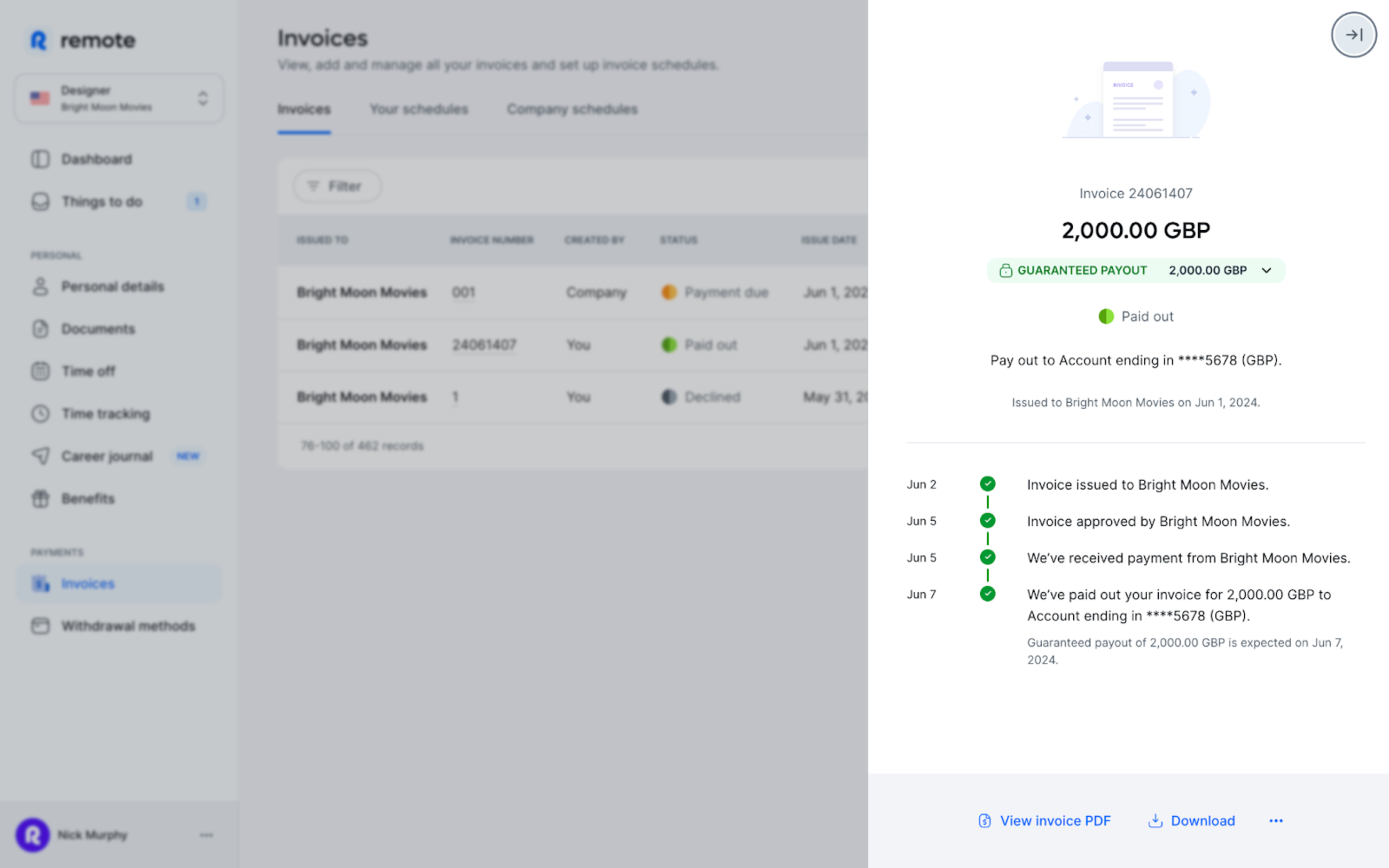
Met Remote hoef je niet langer te vertrouwen op spreadsheets, e-mail en andere handmatige middelen om te factureren. Ons platform laat je facturen aanmaken, ter goedkeuring indienen en uitbetaald krijgen in je lokale valuta zonder andere tools of software. Dat betekent geen eindeloze e-mailuitwisseling meer; je uploadt je facturen in Remote. Wij sturen ze door naar je klanten en geven je statusupdates terwijl de factuur door het goedkeuringsproces gaat.
Facturatie instellen
Als zelfstandige dien je facturen bij klanten in via je Remote-dashboard. Dat kan op twee manieren:
1. Upload je eigen factuur
Maak een factuur met factuurdatum en factuurbedrag en dien de factuur als PDF in.
2. Maak een factuur in Remote
Gebruik onze sjablonen om een factuur op het platform te maken. Je kunt ook een terugkerende factuur aanmaken die automatisch naar je opdrachtgever wordt gestuurd.
Wil je meer weten, bekijk dan dit article in ons Helpcentrum.
Beheer van fiscale verplichtingen voor zelfstandigen
Als zelfstandige ben je verantwoordelijk voor het betalen van je eigen belastingen. Elk land heeft echter een eigen belastingstelsel, waardoor de afhandeling van belastingen per land verschilt.
In de VS, bijvoorbeeld, moet je je belastingen rechtstreeks aan de overheid betalen. In andere landen kan het zo zijn dat klanten belasting van je betaling moeten inhouden. Voor details over fiscale verplichtingen voor zelfstandigen in jouw land, raadpleeg Remote’s Country Explorer pagina.
Dit is mede reden waarom juiste classificatie als zelfstandige belangrijk is: je status bepaalt hoe je belastingen betaalt.
Aansprakelijkheidsoverwegingen voor zelfstandigen
Wanneer je in loondienst bent, regelt het bedrijf aansprakelijkheid. Maar met veel vrijheid komt ook verantwoordelijkheid. Als eenmanszaak ben je persoonlijk aansprakelijk voor zaken als financiële en fiscale schulden. Dat betekent dat privébezittingen kunnen worden aangesproken om zakelijke schulden te voldoen. Dat klinkt beangstigend, maar veel zelfstandigen sluiten liability insurance af om dit risico te beperken.
Het is ook belangrijk jezelf juridisch te beschermen bij het opstellen en ondertekenen van overeenkomsten met klanten. Remote’s juridische specialisten keuren onze contractsjablonen na zodat je compliant bent in het land waar je werkt.
Grip op je onderneming met de Remote Freelancer Hub
Beheer je klanten, regel je contracten en facturen en ontvang betalingen — alles op één plek.
Boekhoudkundige vereisten voor zelfstandigen
Als zelfstandige hoef je doorgaans geen jaarrekening te publiceren. Wel moet je een overzichtelijke administratie bijhouden van je inkomsten en uitgaven, inclusief alle facturen aan klanten en zakelijke aankopen, zodat je je inkomen en belastingen kunt volgen.
Je kunt deze gegevens zelf bijhouden met boekhoudsoftware of een professionele boekhouder inschakelen.
Overweeg ook een aparte zakelijke bankrekening te openen voor je uitgaven. Sommige landen vereisen een zakelijke rekening zodra je omzet boven een bepaalde drempel komt.
Hoe vraag ik het bedrijf waar ik voor werk om me om te zetten in een werknemer?
Ga het gesprek aan en bespreek op een rustige manier de risico’s en voordelen van een werkgever-bediende relatie. Benadruk dat die overstap voordelig kan zijn voor beide partijen, niet alleen voor jezelf. Er zijn verschillende redenen waarom een bedrijf je zou willen omzetten naar een werknemer. Je kunt bijvoorbeeld aanhalen dat de klant meer controle krijgt over de uren die je werkt en de manier waarop taken worden uitgevoerd.
Luister aandachtig naar de bedenkingen van de klant. Internationale klanten vinden het soms lastig om je aan te nemen zonder een juridische entiteit in het land waar je werkt. Stel in dat geval voor dat ze gebruikmaken van een employer of record (EOR).
Een EOR is een dienstverlener die bedrijven helpt werknemers in andere landen in dienst te nemen door als lokale werkgever op te treden. Doorgaans neemt een EOR ook administratieve HR-taken over, zoals lokale payroll, voordelenadministratie en naleving van belastingregels.
Remote is bijvoorbeeld een EOR en kan helpen de overstap te vergemakkelijken door je klant compliant te houden met de wetten in jouw land.
Wil je leren hoe je jezelf als remote-werknemer beter kunt profileren? download dan onze Remote Toolkit.
5 manieren waarop Remote het leven van zelfstandigen en hun klanten vereenvoudigt
Zoals je ziet komt er veel kijken wanneer je als zelfstandige start. Remote kan bij veel taken ondersteunen, zodat jij je kunt concentreren op het laten groeien van je zaak en het bedienen van je klanten. Zo werkt dat:
Lees hier meer over hoe Remote je als zelfstandige kan ondersteunen.
Ga aan de slag met Remote en regel het in een paar minuten
Het is prettig om de vrijheid en flexibiliteit te hebben om op eigen voorwaarden te werken. Maar administratieve verplichtingen kunnen je afleiden van wat je echt wilt doen: je klanten bedienen, snel betaald krijgen en je zaak laten groeien.
Door een betrouwbaar platform zoals Remote te gebruiken, kun je je verplichtingen snel en efficiënt vervullen. Zo kun jij je richten op je bedrijfsdoelstellingen.
Op ons platform kun je snel, makkelijk en zonder gedoe starten als zelfstandige. We begeleiden je bij de onboarding en de stappen om je identiteit te verifiëren voor veiligheidsdoeleinden. Vereiste belastingdocumenten kun je eveneens beveiligd uploaden naar het platform.
Lees meer over hoe Remote jou én je klanten tijd en middelen kan besparen.
Ga vandaag nog aan de slag met Remote.