The most complex global payroll market isn't the one you'd guess

Operational payroll complexity varies 4× across markets — and it doesn't track the countries finance teams worry about. Here's what 4.8 million payslip parameters reveal about where the work actually sits.
Most expansion business cases rest on a quiet assumption: that payroll cost scales with headcount and statutory rate, and that one market is roughly interchangeable with another once you adjust for salary. It was a useful simplification for a long time. It has stopped being safe.
We process payroll as the legal employer across 40 countries, which means we see every line on every payslip — every statutory item, every benefit category, every regional variation. Across 4.8 million payslip parameters in the last twelve months, the operational complexity of running payroll varies by 4× between markets that most plans treat as equivalent. And the markets carrying the most of it are usually not the ones a finance team is bracing for.
The variance is 4×, and it's structural
Germany requires 85 distinct configured pay-element parameters to produce a compliant payslip. Romania requires 21. Two markets that show up as roughly equivalent line items in most expansion plans — both EU, both salaried workforces, both standard "global expansion targets" in the way plans get built — differ by 4× in the operational depth required to run them.
That difference isn't explained by salary level, headcount, or GDP. It's structural: a property of what each country's labor code and tax authority require to be itemized, tracked, and reported every cycle.
It matters because the most common way to estimate global payroll cost — per-employee pricing — implicitly assumes the work scales with people. The data says the work scales with the country's configured shape. Two companies with identical headcount in different markets can be running operations that look nothing like each other, and the one in the more complex market is doing two to four times the work to produce the same output: one compliant payslip.
The number is only half the picture. The composition is the other half.
Two markets can land on a similar parameter count and still require fundamentally different operations.
Germany's 85 parameters concentrate in expense items (36) and incentive structures (26): the operational burden is reimbursement logic and variable-compensation itemization. The Philippines' 74 parameters concentrate in cash benefits, allowances, and statutory deductions: a different operation entirely, organized around a dense layer of small benefit categories rather than reimbursement.
A company running payroll in both isn't running one process twice. It's running two structurally different operations, each with its own controls, its own validation rules, and its own definition of "clean." A 60-parameter market that's mostly expense items needs different controls than a 60-parameter market that's mostly benefits and allowances. The total number is half the answer.
The market most likely to surprise you is the Philippines
By configured depth, the Philippines is the third most complex market in the dataset — ahead of Spain, Ireland, the UK, and Canada. Most companies select it as a cost-efficient market for headcount, on the assumption that operational complexity tracks labor cost. It doesn't. Operationally, the Philippines sits closer to a mid-complexity Western European market than to its low-cost APAC peers. The cost-per-employee figure is low. The operational depth required to administer that employee is not.
Most of the work is the part the forecast never sees
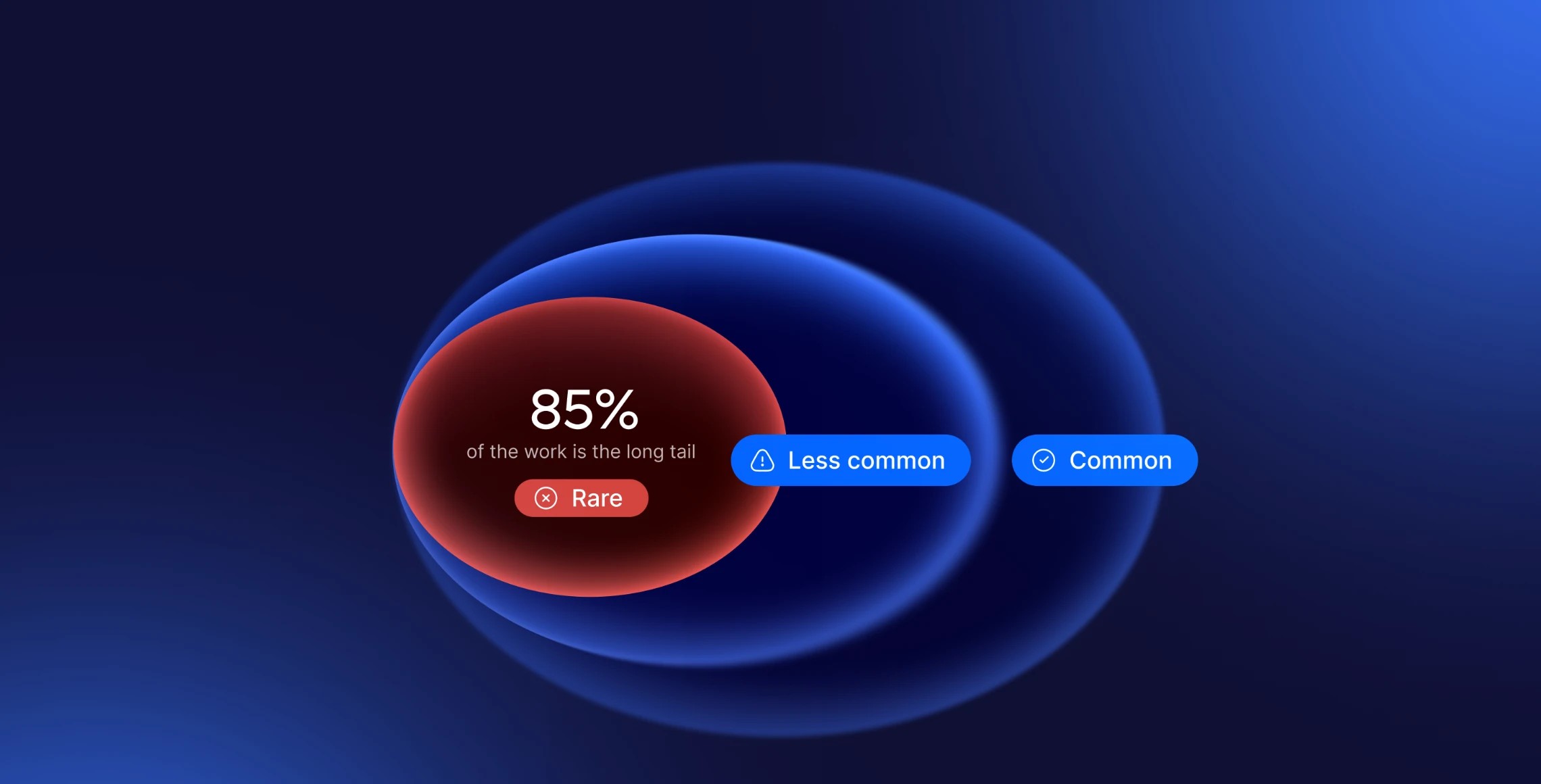
The headline count also hides a long tail. Of Germany's 85 configured parameters, only 12 appear on more than 1 in 20 payslips. The remaining 73 — 86% of the configuration — exist because the country requires them to be available, configured, and current, even though most employees never trigger them.
A forecast accounts for the common case. The operation has to handle the full distribution. That gap is where the picture in most plans diverges from what running the country actually involves.
And the famously hard markets aren't always the moving ones
Germany retains the highest total parameter count in the dataset, but its monthly average dropped 8% over the year. The static ranking and the live trajectory don't always point the same way — which is its own argument for not treating a market's complexity as a fixed input you set once and forget.
What this changes
Treating markets as interchangeable line items mis-estimates the work, and the error compounds with every country you add. Before the next market entry, two questions get at the gap the standard model misses: where does this market sit in operational complexity relative to the ones we already run — not in absolute terms, but in our portfolio's terms — and what's the composition of that complexity, not just the total?
A market that's 1.5× the average depth of your current operation is incremental. A market that's 3× is a step change in scope, and probably needs a different conversation about controls, vendor depth, and team capacity.
Subscribe for the latest updates
Sign up for our newsletter to get the inside scoop on all things remote work and global employment.