
Payroll can be a complex, time-consuming process — especially if you have employees in multiple locations. There are multiple laws to comply with, tax edicts to follow, and a lot of data to manage.
It’s no surprise, then, that many organizations are outsourcing their payroll — or at least considering it. But outsourcing isn’t necessarily the right approach for every business. There are numerous things to think about, not least of which is the importance of choosing the right payroll partner. EOR is the most complete form of payroll outsourcing for international teams
In this article, we’ll discuss the pros and cons of outsourcing payroll, advise you on how to choose the right partner, and cover some best outsourcing practices.
So let’s jump right in.
What is payroll outsourcing?
Payroll outsourcing is the practice of entrusting your company’s payroll processes to a third-party provider. These providers specialize in handling payroll tasks, including:
Calculating employee wages
Withholding taxes
Issuing paychecks
Ensuring compliance with relevant regulations
By outsourcing your payroll, you can streamline your operations, reduce administrative burden, and gain access to expertise.
With the help of technology, the entire payroll process will be more efficient and accurate. For example, there are a number of modern payroll trends that can support teams of all sizes. These include automation, cloud-based global solutions, and stronger data security.
What is international payroll outsourcing?
If you’re hiring (or planning to hire) team members in different countries , payroll can get a lot more complex. For example, you’ll need to consider local labor laws and calculate salaries in a range of currencies.
International payroll outsourcing usually involves working with multiple third-party providers across the globe, which can present additional difficulties around compliance, currency, and communication.
Alternatively, you can outsource international payroll to a specialist global provider like Remote , which we will discuss further in the article.
What is the difference between payroll software and outsourcing?
Payroll software is a tool that helps you manage payroll yourself. It automates calculations, tax withholdings, and pay distributions, but you’re still in charge of overseeing the process.
Outsourcing, on the other hand, means handing over your entire payroll process to another company. They take care of everything from calculations to tax filings, offering expertise and compliance guarantees.
What are the advantages of payroll outsourcing?
Accurate payroll is vital if you want to keep your employees and contractors happy. Outsourcing your payroll can be the key to reliable payments and compliance. Some of the other key benefits include:
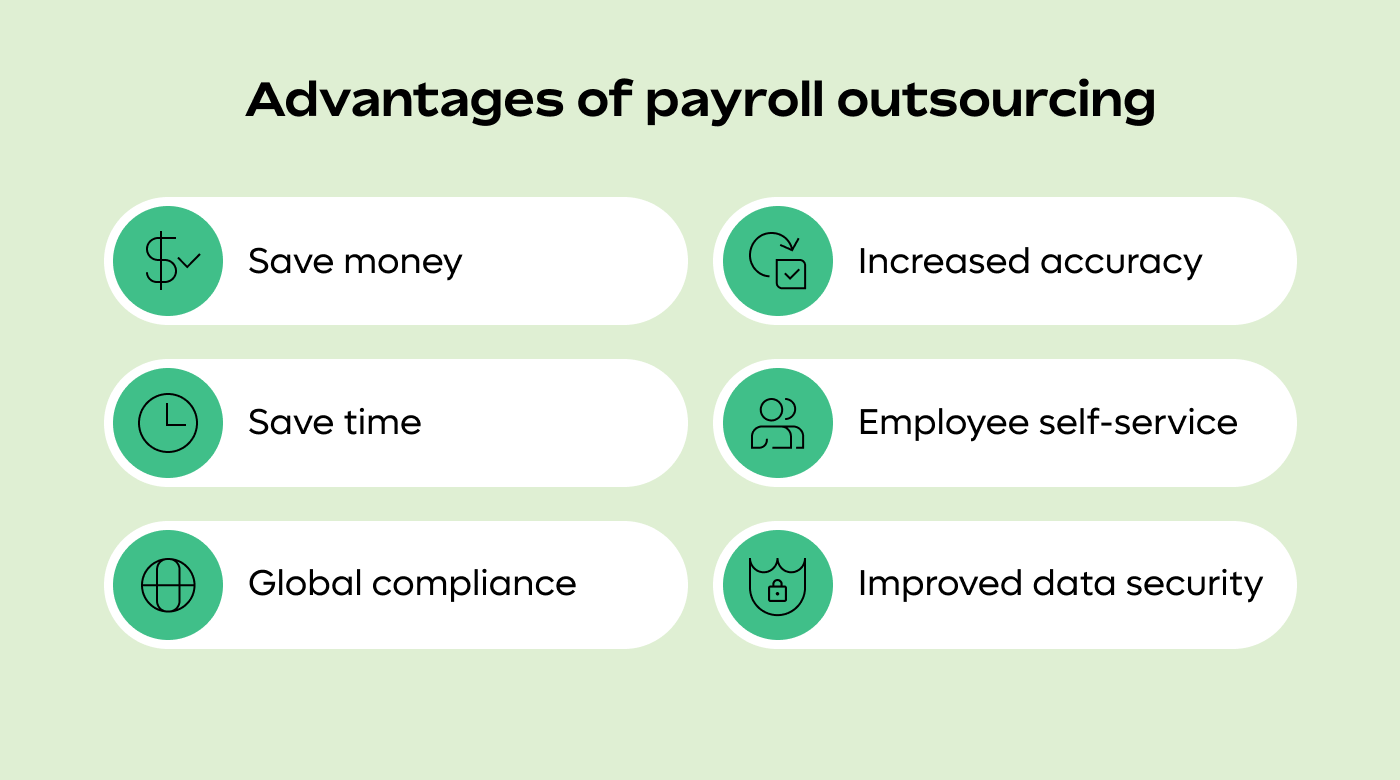
Lower costs
Payroll providers are specialists in their field, which means it’s their job to stay on top of the latest tax laws and regulations around the globe. For a small in-house team, assembling such expertise may be an unrealistic demand.
"If we had to coordinate everything in-house, I’d have to hire an extra four people to manage entities, local solicitors, tax firms, accountants, payroll, and translation services. It would cost upwards of an extra $500,000 per year."
- Luke McKinlay, VP of Finance at Fountain
When you outsource to a global payroll specialist, you also avoid other potential costs due to noncompliance, such as miscalculated overtime or an incorrectly submitted tax form. Outsourcing ensures that you’re in knowledgeable hands, and helps you avoid fines, penalties, and reputational damage.
Time saved
Payroll is an administration-heavy, time-intensive process. By outsourcing all that work to a payroll provider, you save an invaluable amount of time and resources — especially if you’re a small business.
Instead you and your finance team can focus your energy on the big-picture stuff, such as growing the business, finding new ways to boost revenue, and refining your financial strategies.
Compliance across borders
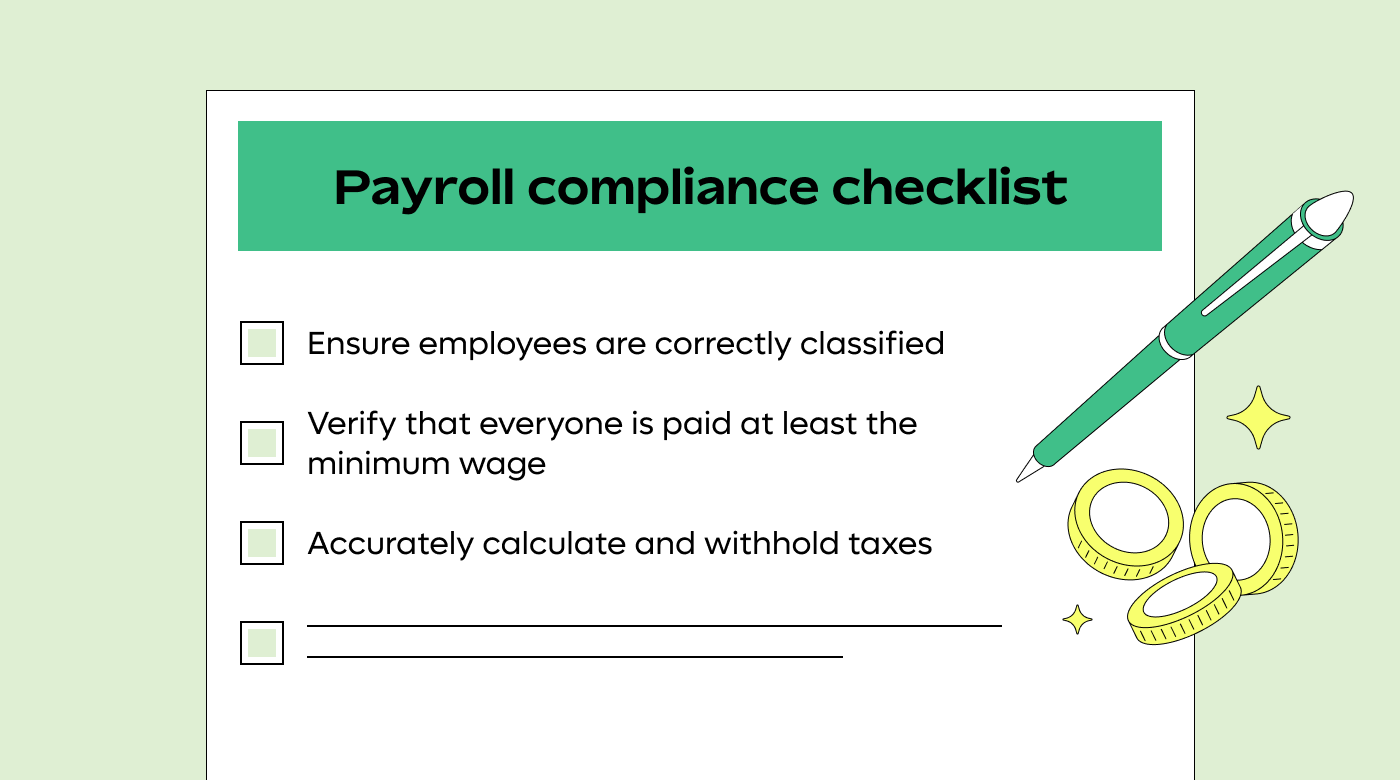
When you’re dealing with payroll across different countries, rules can vary massively, including regulations tied to wages, overtime, taxes, social security, and data protection. To make things more confusing, these laws change often — and slipping up can have serious consequences.
When you outsource, you gain access to local experts who know their jurisdiction and are on top of any potential legislative changes. With a one-stop solution like Remote, you don’t need to partner with multiple providers, either. Our in-house, on-the-ground experts are easily accessible from one place — and on hand to help whenever you need it.
Increased accuracy
No matter how many employees you’re calculating payroll for, it’s easy to make mistakes or run into delays. And when you add new jurisdictions, you multiply the level of complexity of each payroll run.
By outsourcing your payroll, you can minimize the number of mistakes — and the headaches that come with them. Global payroll providers use specialist software and are able to automate many processes , creating efficiencies and cost savings that just aren’t possible if you’re running your global payroll manually, in-house.
Employee self-service
A reliable payroll partner will provide your employees with self-service portals, which enable them to check their pay stubs, keep an eye on their benefits, and tweak their tax details if applicable.
This ensures that your employees retain control over their information, and removes the administrative burden from your HR team.
Improved data security
Wherever money is being handled and transferred between two parties, there’s always the risk of fraud. And it’s not just theft — you also need to consider your employees’ sensitive data and ensure you’re complying with local data privacy laws.
This is a process fraught with potential pitfalls, especially if you don’t have the resources to bolster your security accordingly. With the right payroll partner, you can be sure that your employee data is safe and secure under the latest standardized protocols, and that your payroll runs are being monitored for potential instances of fraud.
What are the challenges of payroll outsourcing?
While outsourcing payroll comes with many benefits, it’s not without its challenges. Here are a few things to keep in mind:
Less supervision
Handing your payroll over to third-party providers means trusting them with sensitive data, including your employees’ details, tax information, and even their attendance records.
In some countries, like the US, you’re also still responsible for filing taxes correctly (unless your payroll partner is also the employer of record (EOR) .
This is why it’s absolutely crucial to do your homework and partner with a payroll provider that is proven, reliable, and trustworthy.
Data security concerns
Since you’re trusting another company with personal and financial data, you need to be sure that it is compliant and able to protect against data theft.
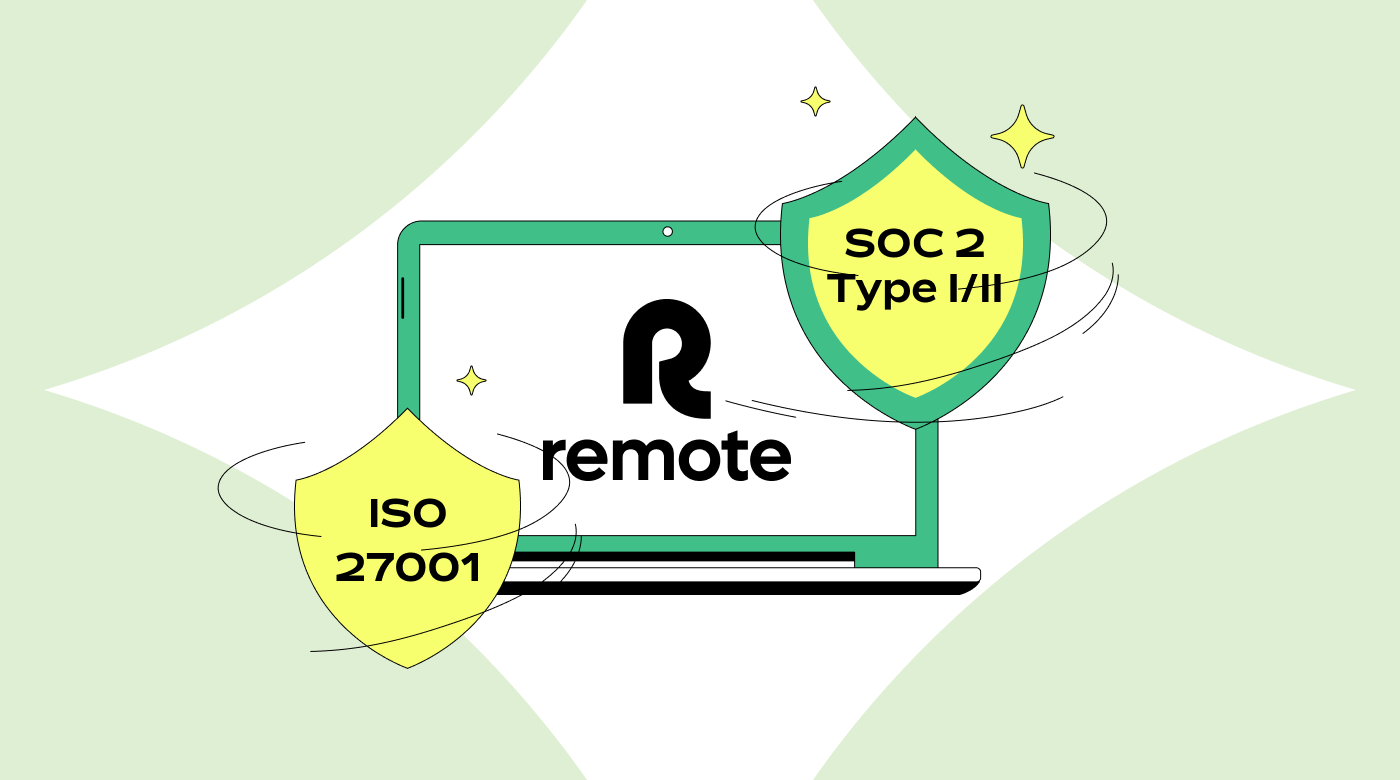
This is why you need to pick a payroll partner with ironclad security. Your partner should use encrypted systems, follow the strictest data security practices, and comply with all relevant data protection laws (like GDPR in Europe or the CCPA in California). Remote ticks all these boxes , and is in line with GDPR, SOC 2, and ISO27001 standards.
Communication issues
Partnering with an external payroll provider (or multiple providers) can lead to communication issues, like delayed responses or misunderstandings. This is especially true if you’re partnering with providers in unfamiliar markets, where there are significant cultural and language differences.
To mitigate this, it’s important to build a positive relationship and find a clear way to talk to each other. You may want to schedule regular check-ins to stay in sync, and have a dedicated point of contact in the payroll company.
"Our CSM — in fact, the whole Remote team — are clear when they offer guidance. I’m not a native English speaker, and the style of communication is so pleasant. I don’t feel alone in the process."
- Evgeniia Maksimova, HR Ops Specialist at Semrush
What about costs?
As mentioned, the potential cost savings of outsourcing can be significant — depending on the size of your business and your circumstances.
Let’s break down the costs and benefits of each, so you can determine what’s best for your company.
In-house payroll
With an in-house payroll department, you have to pay your internal team’s salaries, benefits, and payroll taxes. You must also cover training to help your team keep up with the latest tools and trends. Other staff might spend time on payroll tasks.
In addition, your resources may become tied down in payroll when they could be pushing business growth. Navigating global rules and staying error-free is tricky, and budgeting for it all can be a real headache.
On the flip side, going in-house means having more control and customization. It’s easier to sync with your internal systems and pivot quickly for policy updates or restructurings. You’re building up your own expertise, establishing instant communication, and not relying on a third party, especially if that third party is facing operational challenges.
Outsourced payroll
The costs of outsourced payroll are a little easier to predict. Generally, they involve set monthly or annual fees, plus extras for additional services. Some payroll providers also include hidden fees but, in most cases, you can budget more effectively.
When analyzing cost, it’s important to remember that outsourced payroll has a knock-on effect. It removes payroll tasks from your team’s plate, allowing you to generate value elsewhere.
You’re also paying for expert hands to manage a diverse set of payroll needs with fewer expensive errors, access to advanced tech, and the flexibility to scale easily.
How to choose the right payroll outsourcing partner
As mentioned, it’s crucial to outsource to the right payroll provider. So how do you go about it?
Here are some steps to follow:
1. Assess your needs
As with any purchasing decision, you should first take a step back to really understand what your business needs.
Ask yourself:
How big is the business currently — and how big is it likely to be?
How complex are your payroll needs?
Do you have any special requirements, such as international payroll in certain regions, or the need to possess industry knowledge?
Before you start searching, ensure you’re clear on these points.
2. Do your research
Local expertise in tax and labor laws is non-negotiable. As discussed, non-compliance — whether accidental or otherwise — can land your business in hot water.
This can be a tricky thing to assess, especially if you’re looking for payroll partners in new markets. Where possible, do your due diligence and find out as much as you can about your potential partners. Reach out to contacts, read customer reviews from reputable sites such as G2 , and look to see if your shortlisted companies have had — or are currently having — compliance issues or legal troubles in any of the regions they operate.
If you proceed to a demo or sales pitch, ensure you clarify the vendor’s model, too. Do they handle compliance and tax laws in-house? Or do they outsource it to third parties? Find out as much as you can before committing and ask questions if you need to.
3. Consider security
As discussed, security is crucial. Ask potential providers how they guard all the sensitive data they handle and don’t settle for platitudes.
Find out, in detail, what kinds of security measures they have in place, including official security certifications and protocols. If possible, consult with your own in-house security experts (or, if you’re unsure, ask an independent security expert). If your potential payroll provider is unwilling or unable to give you this information, it may be cause for concern.
4. Understand costs and scope
One of the biggest issues for payroll clients is hidden fees and “sneaky” costs. As well as being dishonest, these costs can wreak havoc with your hiring budget.
Clarify from the start what exactly is covered under the provider’s base fee, and what (if anything) is going to cost extra. Cover your bases, ask about hypothetical scenarios, and don’t just focus on standard payroll operations costs. For instance, some providers incorporate hidden termination fees when an employee leaves, or charge sizable sums to transfer to a new provider.
5. Examine their customer support
Helpful, reliable customer support can make all the difference when you’re dealing with payroll, especially when time is of the essence.
When checking out providers, dig deep into their customer support processes. Is there help available 24/7? What support channels are available? Do they speak your language? Will they provide a dedicated account manager?

Assess their self-serve resources, too. Sometimes, you may need a quick answer that doesn’t require speaking to an agent. Do they have a clear, well-documented knowledge base? Is it easy to find what you’re looking for?
The last thing you want is to commit to a partnership agreement, and then find yourself alone with calls and emails going unanswered.
"Straight away, we got the sense that Remote cares about our success — that there was a person at the other end who was really listening and trying to find solutions for us. We weren’t simply directed to an FAQ sheet on the website."
- Maria Shkaruppa, Senior Global Mobility and Remote Hiring Manager at Semrush
6. Check for integrations
To make your life significantly easier, you’ll want to use a payroll platform that can integrate seamlessly with your existing HR tech stack. Ideally, there will be an API option , too, so that you can customize your integrations.
Alternatively, to make things easier again, you can simply partner with an all-in-one global HR provider, like Remote, and have everything under one roof.
Our platform offers multiple tools (as well as integrations and API capabilities), including:
Employer of record (EOR) services
Global payroll
Benefits management
Human resources information system (HRIS)
Contractor management
Learn more about how our global HR solutions can help your business streamline and grow.
7. Consider scalability
Finally, keep your business’s growth strategy in mind. If you only plan to hire and pay team members in one country, it may make sense to partner with a payroll provider in that country.
However, if you’re planning to leverage the many benefits of hiring in different countries, you may want to opt for a payroll provider that can easily accommodate that.
Things can change fast and pivots can happen, but you don’t want to be locked into an agreement with a provider that can’t grow with you.
Transitioning to outsourced payroll
If you decide to start outsourcing, you need to plan carefully and take your employees’ concerns into account. Here are some key things to consider when you go from in-house to outsourced:
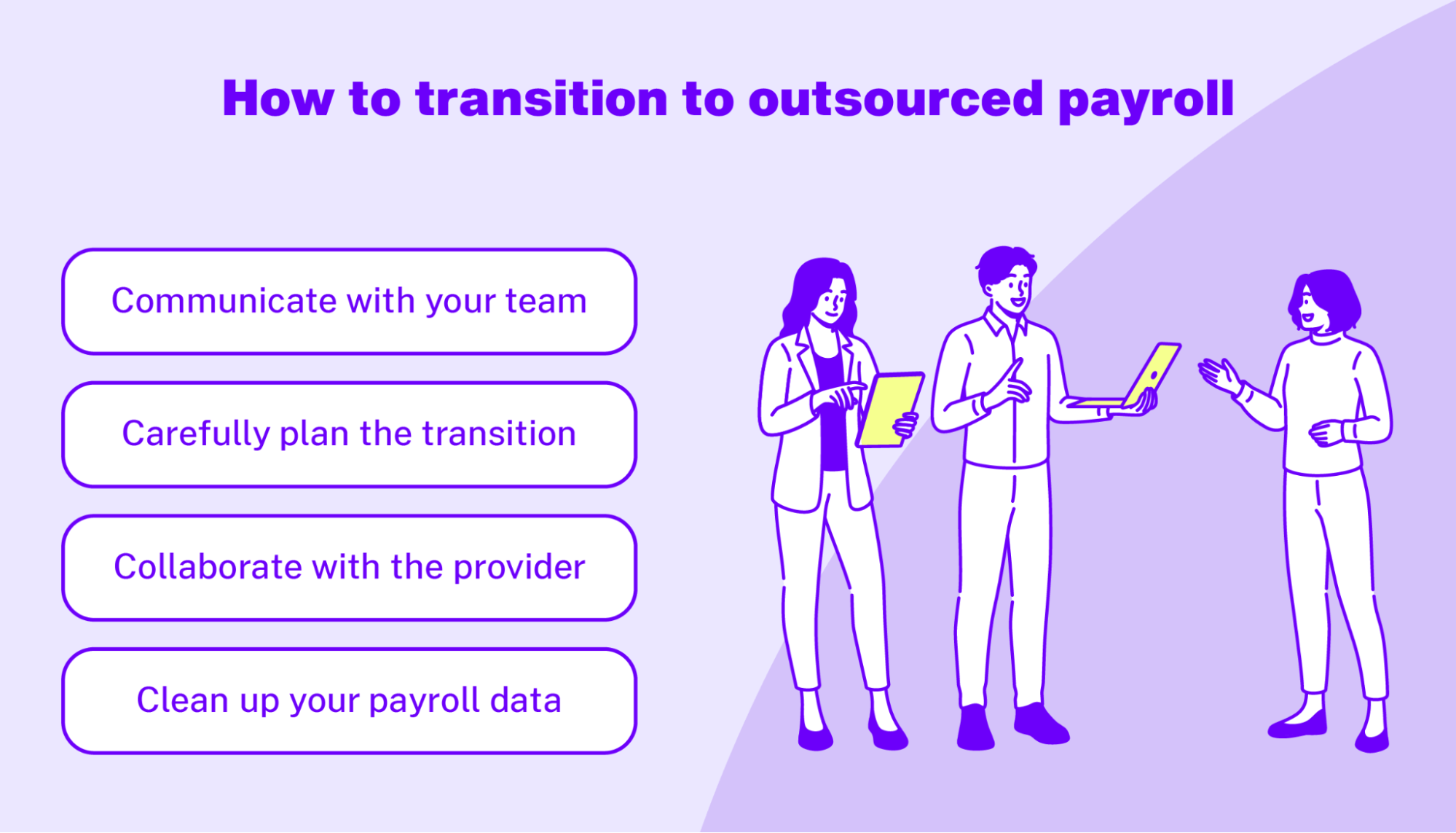
Communicate with your team
Before you do anything, communicate your intention to change with your team. Let them know what’s changing, why you’re doing it, and — most importantly — how it will affect them.
Keeping everyone in the loop helps manage expectations, ease any worries or uncertainties, and ensure your team feels informed at every step.
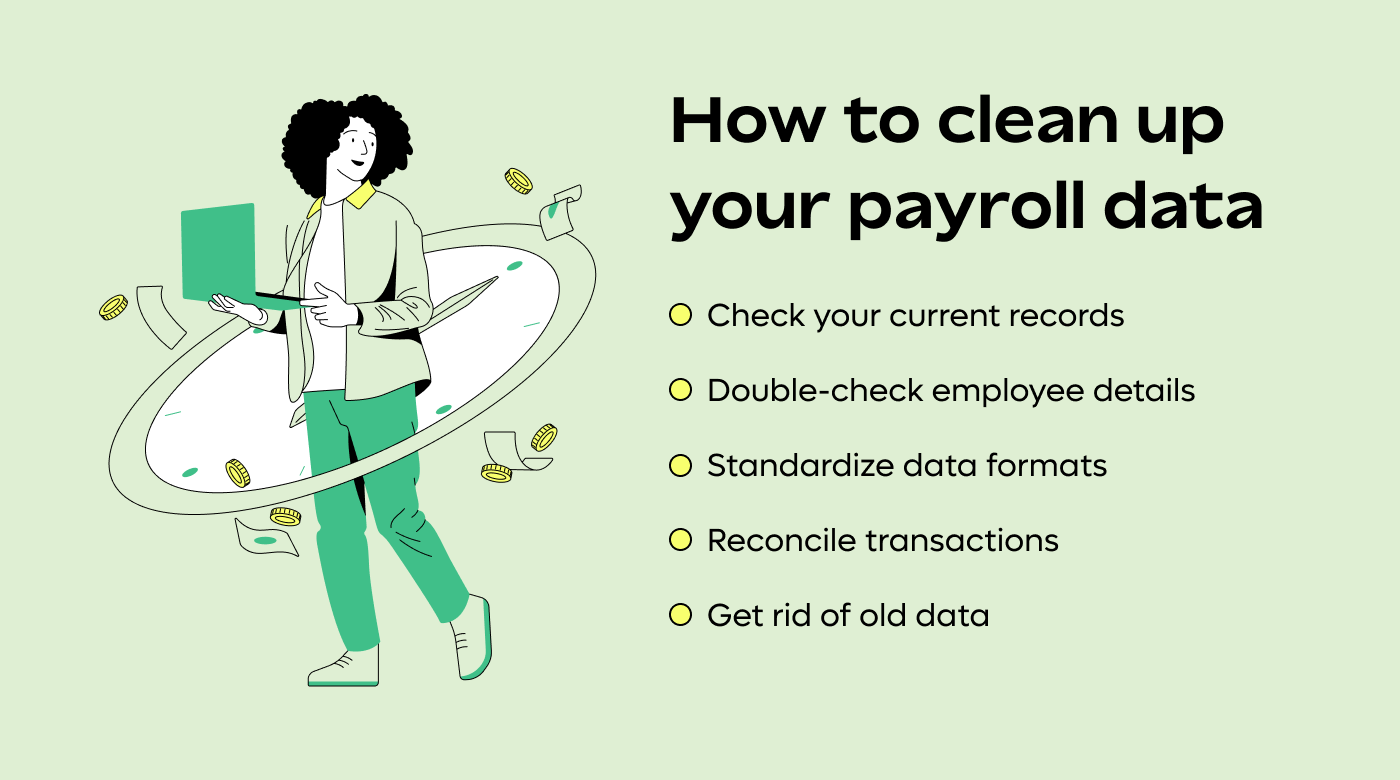
Clean up your payroll data
Before handing over your payroll data, take the time to review it for accuracy and clarity, and clear up any discrepancies or outdated information.
This will save you from potential headaches in the future and lay a solid foundation for success.
Plan the transition
For your transition to go smoothly, it’s advisable to implement a plan. Set up a timeline, figure out who’s responsible for what, and highlight the key milestones in the process.
Communicate closely with your payroll provider to ensure the plan is realistic and achievable.
Collaborate closely with your provider
Try to lean on your provider as much as possible. Their experience and expertise are invaluable, and they will be able to spot and avoid potential problems before they happen.
Remember, this partnership isn’t just about handing over tasks; it’s also about tapping into the provider’s expertise to make the process as pain-free as possible — for both parties.
Outsourcing payroll with Remote
If you’re thinking of outsourcing, finding, vetting, and working with multiple third parties is one option. However, this can easily lead to inefficiencies and unnecessary staffing costs, and make it difficult to build trustworthy relationships.
It’s far easier and more transparent to work with a partner that provides domestic or multi-country services in one optimized solution. Specifically, we can:
Consolidate your payroll processing
Minimize administrative tasks
Ensure compliance with local labor laws
Reduce your payroll costs
Make international payments and capital cash transfers
Handle tax deductions and tax returns
Remote can do all the heavy lifting for you, giving you peace of mind and allowing you to focus your time, money, and resources elsewhere.
To learn more, speak with one of our friendly experts — and see how Remote can help your business.
Payroll outsourcing FAQs
Is it more expensive to outsource?
No, outsourcing is usually the more affordable option — especially for small businesses. If you don’t have the funds for new infrastructure and full-time payroll staff, outsourcing can help you avoid a big financial outlay.
The price of payroll outsourcing is usually transparent, with a flat monthly rate. This helps you stick to a budget. There are pros and cons to outsourcing, and the right choice will depend on your unique business goals.
Is outsourcing HR cost-effective?
When you choose the right HR solution, outsourcing can be a cost-effective option. You gain access to skills and expertise without the overhead that comes with additional staff. For example, you’ll save money on computers, office space, benefits, and more.
You can take the pressure off your existing team by outsourcing certain tasks. This option is also good for maintaining compliance, reducing human error, and improving the onboarding process.
Outsourcing gives your business the chance to grow and scale until you’re ready to commit to the expense of in-house employees.
What are the challenges large companies face when optimizing their payroll systems?
Before optimizing your payroll systems, be prepared for potential challenges. For example, payroll accuracy and maintaining tax compliance should be a priority.
You'll also need to consider employee benefits, overtime, and security. Payroll requires sensitive employee information, and this needs to be protected.
Choose an efficient payroll management solution like Remote and avoid any major issues. Meeting your payroll requirements will be a breeze, and you can support team members anywhere in the world.
Is confidential data secure when outsourced?
For accurate payroll, you’ll need to collect personal information including birthdates, Social Security numbers, addresses, wages, and more.
This type of data is valuable to criminals and they are always looking for insecure points of entry. To reduce the risk of a security breach when you outsource, make sure the partner you choose has strict security measures in place. For example, they should comply with data protection laws such as the GDPR.
The voluntary security and compliance standard SOC 2 is also recommended because it has clear guidelines on how to deal with sensitive data.